
Views: 264 Author: CORTECH Publish Time: 2026-09-30 Origin: Site


Content Menu
● How Surface and Underground Core Drills Differ
● Where Should Mineral Exploration Holes Start?
>> Choose a surface core drill for broad target testing
>> Choose an underground core drill for mine-based targets
● Why Rig Dimensions Alone Can Mislead
● Compare Performance at the Planned Hole
>> Core quality is a separate decision criterion
● What Changes in Safety Planning Underground?
● Compare Cost per Usable Result
● A Practical Two-Option Selection Test
>> Step 1: Draw both hole paths
>> Step 2: Test access in both directions
>> Step 3: Define the sample specification
>> Step 4: Review operational constraints
>> Step 5: Request comparable proposals
● Matching CORTECH Rigs to the Site
● Make the Rig Fit the Exploration Plan
>> 1. Can an underground core drill be used on the surface?
>> 2. Is a surface core drill always more powerful?
>> 3. Do both rigs support wireline diamond coring?
>> 4. Which rig is better for horizontal or upward holes?
>> 5. Does drilling closer to an orebody guarantee a better sample?
>> 6. What information should go into a rig request for quotation?
An underground mining core drill and a surface core drill can both recover rock samples for mineral exploration. The difference is where—and under what constraints—they must work. A surface rig is usually selected to test targets from an exploration pad. An underground rig must reach the same geological objective through mine access, restricted space, and a wider range of drilling angles.
The right choice is therefore not simply "Which rig drills deeper?" It is which drilling setup reaches the target safely, produces usable core, and fits the project's access, power, water, and operating requirements.
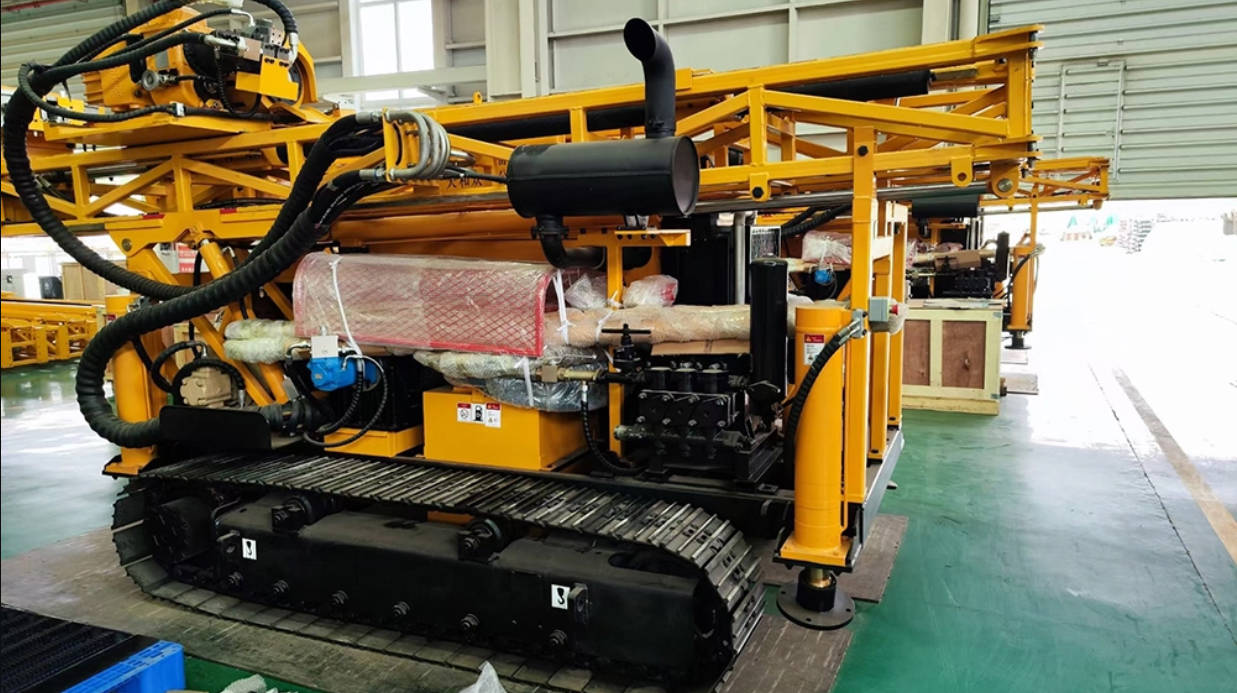
Both rig types can use hydraulic rotation, diamond bits, and wireline coring. In a wireline system, the crew retrieves the core-bearing inner tube through the drill string rather than pulling every rod for each core run. That principle does not change when drilling moves underground. What changes is the rig layout and the worksite around it.
| Selection factor | Surface core drill | Underground mining core drill |
|---|---|---|
| Primary location | Prepared outdoor pad or accessible mine surface | Decline, drift, gallery, or drilling chamber |
| Typical exploration role | Test targets from surface; expand coverage across a property | Define targets accessible from existing underground workings |
| Main layout concern | Pad stability, access, weather, and support equipment | Drift clearance, setup room, ground conditions, and traffic |
| Hole orientation | Commonly downward or inclined | May need downward, horizontal, or upward holes |
| Power planning | Engine or available site power, depending on configuration | Power supply assessed alongside ventilation and mine rules |
| Water management | Supply, containment, and permitted discharge | Supply, drainage, return flow, and housekeeping in confined workings |
| Logistics | Moving the rig and support equipment between pads | Getting every component through the mine and into position |
| Cost question | What does each productive pad and hole deliver? | What does each setup deliver without disrupting mine operations? |
Neither category guarantees better core recovery. Bit selection, ground conditions, drilling fluid, operating practice, and sample handling also affect the result. Nor should buyers assume that every surface rig is large or every underground rig is shallow. Compare actual configurations against the planned holes.
A surface core drill for mineral exploration is often the practical starting point when the target can be intersected from accessible ground. Crews can lay out collars across a prospect, adjust hole spacing as geological interpretations develop, and move between pads.
This approach suits early exploration and many deeper follow-up programs. Yet a map view can hide substantial field work. The team still needs suitable access, a stable pad, water, rod storage, core handling space, and a plan for site restoration. A theoretically good collar is not useful if it cannot be built or operated safely.
For contractors, mobility deserves as much attention as drilling capacity. Ask how the complete system travels between pads, not just how the drill unit moves. The pump, rods, core boxes, fuel or electrical supply, and service equipment are all part of the operation.
An underground mining core drill becomes valuable when existing workings provide a useful position from which to test extensions, refine an orebody model, or investigate ground around planned mining areas. A drilling chamber may put the collar closer to a particular target than a feasible surface position.
This does not automatically make underground drilling faster or cheaper. Mine access must be available, and the drilling layout must coexist with ventilation, ground support, haulage, services, and other activities. The rig's stated dimensions matter, but so does the space required for mast movement, rods, operators, maintenance, and core removal.
The geological target should determine the collar. The collar location, in turn, should guide the rig choice—not the other way around.

A compact underground rig can still be a poor fit if its components cannot pass through a restrictive turn or if the assembled feed cannot reach the required angle. Similarly, a capable surface rig can be impractical if moving it requires extensive access work for only a few holes.
Before selecting either rig, map the entire operating envelope:
- Transport route: Check widths, heights, gradients, turning points, and lifting limitations.
- Setup footprint: Allow for the rig, power unit, pump, controls, rod staging, and safe movement.
- Hole geometry: Confirm collar position, azimuth, inclination, and clearances throughout setup and drilling.
- Service access: Make room to inspect, maintain, and remove components.
- Core flow: Decide where core is transferred, labelled, stored, and transported.
For underground work, check these details at the most restrictive point of the route—not only at the drilling chamber. For surface work, assess the weakest access section and the pad conditions expected during the drilling season.
Published maximum drilling depths are useful for initial screening, but they are not an apples-to-apples productivity measure. Capacity can change with rod size, hole angle, ground conditions, and the assumptions behind a manufacturer's rating. An upward underground hole, for example, poses different handling and circulation questions from a downward surface hole.
A better technical review begins with a hole schedule. For each planned hole, specify:
1. Target and trajectory: Expected collar, angle, length, and required downhole surveys.
2. Core requirement: Hole diameter, sample volume, logging needs, and retained material.
3. Ground conditions: Overburden, competent rock, broken intervals, and anticipated water.
4. Tooling system: Compatible rods, bit sizes, core barrels, overshots, and spares.
5. Rig functions: Feed travel, pullback, rotation range, winches, clamps, and rod handling.
6. Support systems: Power, flushing-water supply, return-water control, and servicing.
Then ask the supplier to explain its proposed setup hole by hole. If a quotation states one headline depth without identifying the rod and operating assumptions, request clarification before treating it as a comparable specification.
A rig that advances quickly but loses critical intervals may deliver poor exploration value. Build core-recovery recording, geological logging, photographs, sample identification, and suitable quality checks into the drilling program. The geologist's required sample size should influence hole-diameter selection before the equipment is ordered.
Where structures matter to the interpretation, discuss whether oriented core is required. Record hole deviation at intervals suited to the hole and the project. These are program decisions, not features that a rig specification can settle on its own.
Surface and underground drilling both require sound ground assessment, equipment guarding, safe handling, and competent operators. Underground work adds a particularly close interaction between the drill and the mine's existing systems.
Before mobilization, the mine operator and drilling contractor should resolve:
- Ground control: Is the chamber suitable for the proposed equipment and crew?
- Ventilation and air quality: Does the selected power arrangement fit the mine's ventilation plan and applicable requirements?
- Traffic and access: Can people and equipment move safely while drilling is underway?
- Water: Where will flushing water come from, and where will returns go?
- Electrical services: How will cables be routed, protected, and isolated where applicable?
- Rod handling: Can rods and inner tubes be handled within the available clearances?
An electrically powered hydraulic rig avoids engine exhaust at the drill, but it does not remove the need to assess ventilation or electrical safety. Mine-specific rules and the site's approved procedures govern the final arrangement. On the surface, the equivalent review focuses more heavily on pad conditions, weather exposure, equipment movement, and water or fuel management.
Treat these as design inputs before procurement, not problems to solve after the rig arrives.
A low purchase price or a high advertised penetration rate does not, by itself, identify the better exploration option. The more useful question is: What will it cost to deliver the planned holes and the geological information they are meant to provide?
For a first-pass comparison, separate costs into four groups:
| Cost group | Questions for a surface program | Questions for an underground program |
|---|---|---|
| Access and setup | How many pads and moves are needed? | Is chamber preparation or mine scheduling needed? |
| Drilling | What are the expected drilling and retrieval cycles? | How do hole direction and available space affect those cycles? |
| Support | What water, transport, and site services are required? | What power, drainage, ventilation coordination, and transport are required? |
| Interruptions | How might weather or difficult access affect the schedule? | How might mine traffic, access windows, or other work affect it? |
Avoid claiming a universal cost advantage for either location. A surface collar may involve substantial access work. An underground collar may avoid some surface work but require more coordination with the mine. Use the same target, sample requirement, and schedule assumptions when comparing alternatives.

When both collar locations appear possible, use a short decision review before requesting a final rig quotation.
Have the geological team show the proposed surface and underground collars against the same target. Identify what each path is intended to test. Do not compare rigs until the holes answer comparable geological questions.
For the surface option, confirm pad feasibility and equipment movement. For the underground option, trace every component from mine entry to the chamber. Include the space needed to assemble, operate, service, and remove the drill.
Set the required core diameter, expected hole lengths, core handling procedure, and any orientation or geotechnical requirements. These determine whether a proposed rig-and-tooling combination is genuinely suitable.
Bring the drilling supervisor, geologist, mine representative, and safety personnel into the review. Resolve water, power, ground conditions, access windows, and emergency arrangements before comparing productivity.
Give suppliers the same hole schedule and site constraints. Ask each to identify assumptions, exclusions, recommended tooling, component dimensions, and service provisions. The strongest proposal is the one the project team can verify—not necessarily the one with the largest headline capacity.
CORTECH develops and manufactures full-hydraulic diamond core drilling rigs and presents separate CORE SURFACE DRILL and CORE U/G DRILL ranges. Its surface offering includes crawler-mounted options intended for movement between ground-surface drilling positions. Its underground solution emphasizes modular components for assembly in constrained mine settings.
Those categories are a useful starting point, not a substitute for a model-specific review. A buyer should send CORTECH the planned hole schedule, rod and core-size requirements, access dimensions, available power, and site conditions. Ask for the proposed configuration and the assumptions behind its rated capacity.
For an underground inquiry, include the tightest transport clearance and chamber layout. For a surface inquiry, include terrain, pad access, expected moves, and support-equipment needs. That information allows a supplier to respond to the actual work rather than a generic request for a "deep drilling rig."
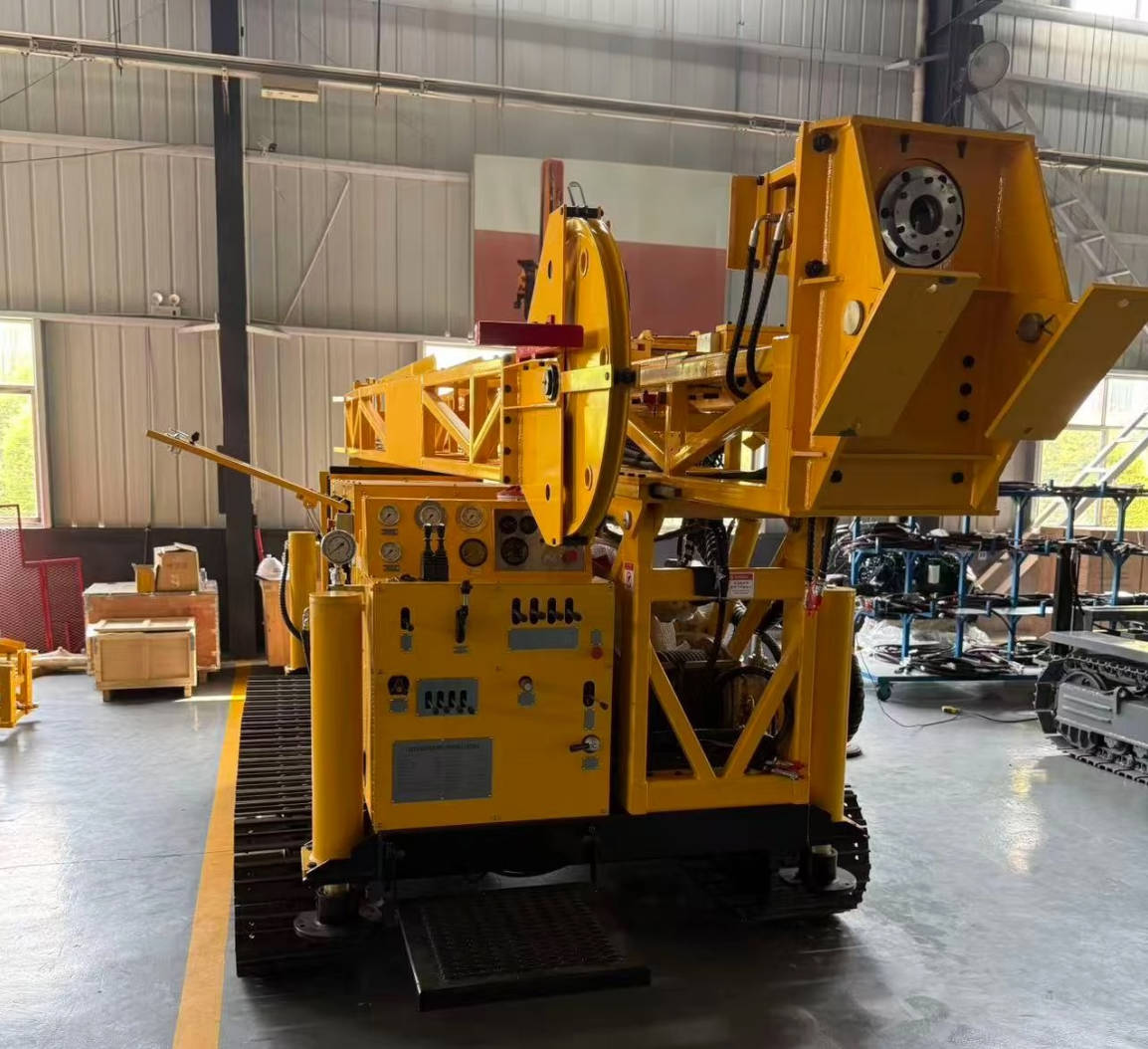
The strongest choice between an underground mining core drill vs. a surface core drill begins with the target, then tests the complete route from collar design to usable core. Surface rigs offer a practical way to cover accessible prospects. Underground rigs can make mine-based targets reachable from existing workings—but only when the chamber, services, and operating plan support the work.
Send CORTECH your hole schedule and site-access details to request a configuration review for its CORE SURFACE DRILL or CORE U/G DRILL range. Include the tightest clearance, proposed hole angles, required core size, and available power and water so the recommendation addresses your project rather than a headline depth rating.
Sometimes. A compact rig may suit certain surface work if its configuration, setup, power supply, and operating conditions are appropriate. Do not assume that "underground" means it is limited to one location; verify the specific model and planned holes.
No. Power and drilling capacity vary by model and configuration. Compare performance against the same hole diameter, length, angle, and ground assumptions rather than comparing rig labels.
They can, but confirm the supplied configuration. Wireline coring retrieves the inner tube through the rod string. Check that the proposed rods, barrels, overshot, winch, and other tooling form a compatible system.
An underground rig with a suitable angle-setting and handling arrangement may be the practical choice when those holes start in mine workings. Confirm the model's permitted drilling positions and the procedure for the specific hole direction; do not infer capability from a general product-category name.
No. Collar position may improve access to a target, but sample value also depends on hole trajectory, recovery, logging, surveys, and handling. The geological team should define what the hole must demonstrate before equipment selection.
Provide planned hole lengths and angles, core diameter, expected ground conditions, access and setup dimensions, power and water availability, and the drilling schedule. Ask the supplier to state all capacity assumptions and exclusions.
1. [Canadian Institute of Mining, Metallurgy and Petroleum — CIM Mineral Exploration Best Practice Guidelines (2018)]. Guidance on drilling-program design, hole diameter, deviation surveys, logging, core retention, and sample quality. [mrmr.cim]
2. [Epiroc — Core drilling methods]. Industry explanation of surface and underground rig applications, compact underground layouts, drilling angles, and selection factors. [epiroc]
3. [Epiroc — Wireline core drilling]. Explanation of inner-tube retrieval and the role of compatible coring tools. [epiroc]
4. [U.S. Mine Safety and Health Administration — Program Policy Manual, Volume IV: Metal and Nonmetal Mines]. Reference for U.S. mine-safety topics, including ground conditions, air quality, equipment, and electrical matters; requirements vary by operation and jurisdiction. [msha]
5. [CORTECH — Full Hydraulic Diamond Core Drilling Rigs]. Manufacturer information on its surface and underground product categories and surface rig examples. Product descriptions are manufacturer-provided. [cortechdrilling]
6. [CORTECH — Hydraulic Core Drilling Rig Solutions]. Manufacturer descriptions of crawler or skid-mounted surface rigs and modular underground drilling solutions. [cortechdrilling]


