
Views: 216 Author: CORTECH Publish Time: 2026-10-10 Origin: Site


Content Menu
● What Do Diamond Core Drilling and Conventional Rock Drilling Mean?
>> Diamond Core Drilling: Recovering Rock in Its Geological Sequence
>> Conventional Rock Drilling: Several Methods, Not One
● Diamond Core Drilling vs. Conventional Rock Drilling: Comparison Table
● Mineral Sampling Quality: Geological Detail Is Not the Same as Assay Accuracy
>> Why Diamond Core Offers More Geological Context
>> Why RC Samples Can Still Be Valuable
>> Why High Core Recovery Does Not Prove an Unbiased Sample
● Drilling Speed and Cost: Compare Useful Information, Not Just Metres
>> When Conventional Rock Drilling Has an Economic Advantage
>> A More Useful Budget Comparison
● Ground Conditions, Depth, and Equipment Requirements
>> Broken, Weathered, or Water-Bearing Ground
● Structural Geology, Geotechnical Work, and Metallurgical Sampling
>> Oriented Core for Structural Interpretation
>> Testing Requirements Beyond Grade
● Three Practical Ways to Improve the Method-Selection Decision
>> 1. Define Sample Acceptance Before Requesting Quotations
>> 2. Monitor Sampling Quality During Drilling
>> 3. Use a Staged Program Where It Fits the Geology
● Selecting a Fully Hydraulic Surface Core Drilling Rig
● Safety and Environmental Planning
● Plan Your Mineral Sampling Program with CORTECH
>> 1. Is Diamond Core Drilling Better Than Conventional Rock Drilling for Mineral Sampling?
>> 2. Can Reverse Circulation Samples Be Used for Mineral Resource Estimation?
>> 3. Does Wireline Core Drilling Eliminate Rod Removal?
>> 4. Which Method Is Better for Narrow Mineralized Veins?
>> 5. Is Diamond Core Always an Undisturbed Sample?
>> 6. How Should Buyers Compare Surface Core Drilling Rigs?
Diamond core drilling vs. conventional rock drilling for mineral sampling is a choice between different kinds of geological evidence—not simply different drilling speeds. Diamond drilling recovers cylindrical rock core that preserves geological relationships. Conventional non-core methods recover chips or cuttings, often enabling faster exploration coverage but providing less structural detail.
For exploration teams, the deciding question is straightforward: what must the sample reveal before the next investment decision?
From CORTECH's perspective as a manufacturer of fully hydraulic wireline diamond core drilling equipment, we would prioritize representativeness over headline penetration rates. An efficiently drilled hole has limited value if its samples cannot reliably answer the geological question.

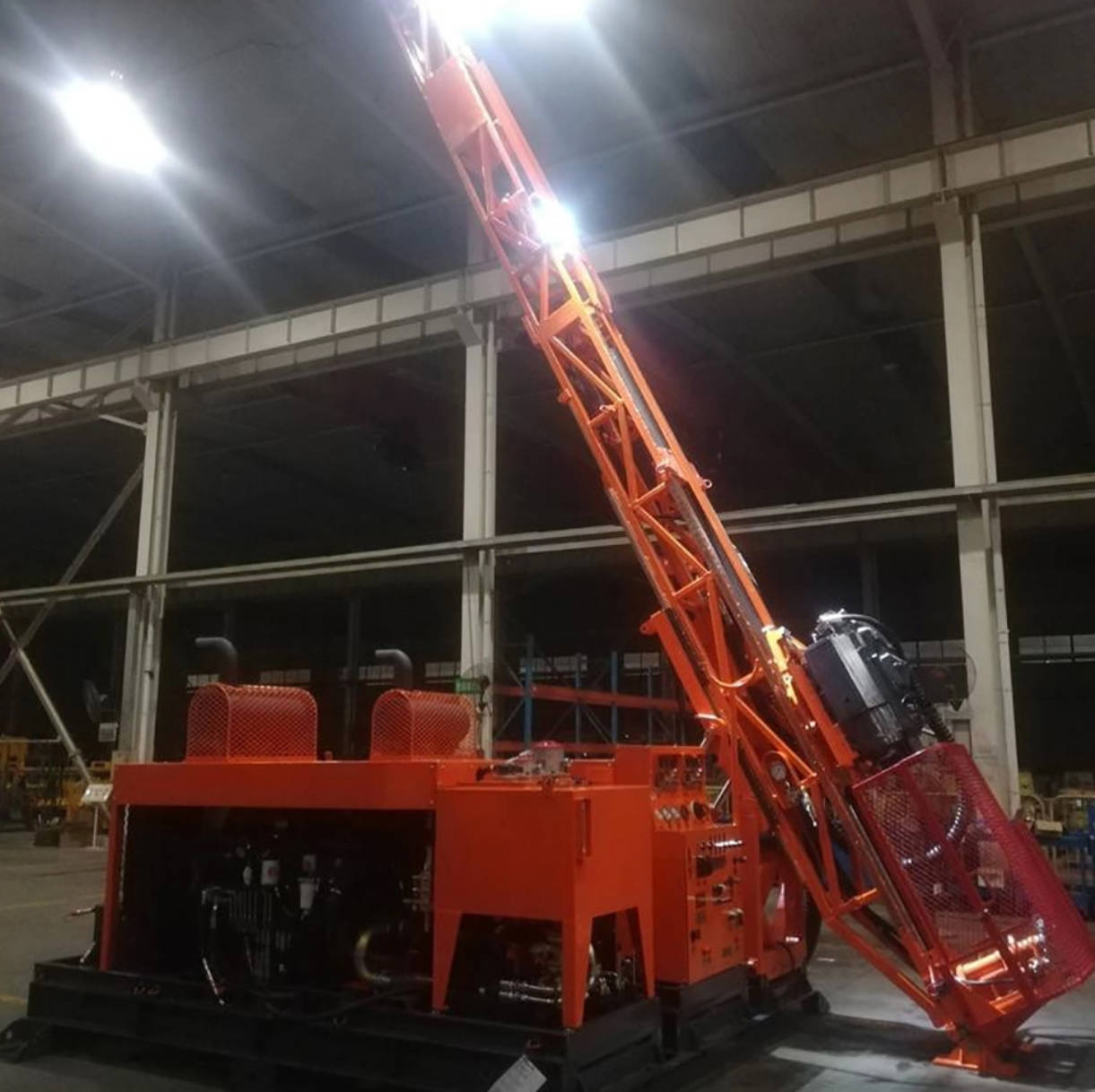
Diamond core drilling uses a rotating diamond cutting bit to cut an annular path through rock. The remaining cylindrical core enters a core barrel and is recovered for examination.
In wireline systems, an overshot attached to a cable retrieves the inner tube through the drill string. This avoids removing the entire drill string for every routine core retrieval, although rods must still be removed for operations such as bit replacement.
The recovered core allows geologists to examine:
- Rock types and alteration.
- Mineralized veins and geological contacts.
- Fractures, faults, and other structures.
- Material suitable for selected density, geotechnical, and metallurgical investigations.
Core is not automatically intact or unbiased. Broken ground, inappropriate drilling parameters, and material loss can compromise its value.
"Conventional rock drilling" is not a single standardized mineral-sampling method. Here, it means non-core drilling, particularly reverse circulation, open-hole percussion, and rotary methods that produce chips or cuttings.
Reverse circulation, or RC, deserves separate treatment. It returns samples through an internal passage in dual-wall drill pipe, rather than relying on cuttings travelling along the borehole annulus.
This distinction matters. Properly controlled RC sampling can produce useful assay data. General-purpose open-hole drilling should not automatically be treated as equivalent to a dedicated RC mineral-sampling system.
| Comparison factor | Diamond core drilling | Conventional non-core drilling |
|---|---|---|
| Sample form | Cylindrical core, sometimes fragmented | Chips, cuttings, and fines |
| Geological sequence | Preserved where recovery is adequate | Inferred from interval samples |
| Structural information | Supports detailed measurements; orientation requires additional tools and procedures | Original rock fabric and orientation largely lost |
| Sampling boundaries | Can follow visible geological contacts | RC commonly uses fixed-length intervals |
| Production rate | Often slower than RC in suitable comparable conditions | RC often provides faster coverage |
| Cost per drilled metre | Frequently higher | RC frequently lower in suitable ground |
| Main sampling risks | Core loss, washing, breakage, handling errors | Fines loss, carryover, wet-sample problems, splitting bias |
| Common applications | Detailed geology, structural interpretation, targeted testing | Target screening, infill sampling, grade control |
| Resource-estimation suitability | Depends on sample quality and program design | RC can be suitable when quality is demonstrated |
These are tendencies, not guaranteed performance rankings. Lithology, groundwater, depth, equipment, and operating practices can change the outcome.
An assay reports elemental concentration. Core can also show how mineralization relates to veins, host rocks, alteration, and deformation.
That context becomes especially important when mineralization follows narrow structures or changes abruptly across contacts.
Core sampling intervals can be selected around visible geological boundaries. Fixed-length RC intervals may combine mineralized and unmineralized material in one sample, reducing boundary resolution.
However, a drill intersection is not automatically the true thickness of an orebody. Hole direction, geological geometry, and downhole surveys remain essential.
RC is not inherently an inferior source of grade information. Its suitability depends on whether the collected sample adequately represents the drilled interval.
A reliable RC program needs control over the complete sampling pathway:
1. Rock fragmentation at the bit.
2. Sample transport through the drill string.
3. Cyclone collection.
4. Sample splitting.
5. Identification, transport, and laboratory preparation.
A sophisticated splitter cannot correct material already lost or mixed before reaching it.
Core recovery measures how much drilled material was recovered. It does not, by itself, demonstrate that every mineral component was recovered proportionally.
Preferential loss of soft, friable, or mineral-rich material can distort the retained sample. Conversely, lost material may be relatively barren.
The practical requirement is to examine recovery alongside geology and assay results, rather than interpreting recovery as a standalone quality certificate.

RC often provides faster and cheaper sample collection than diamond drilling in suitable conditions. This makes it attractive when a program needs broad spatial coverage and interval-based grade information.
Its advantage can weaken when groundwater, unstable formations, or sampling problems require additional equipment, slower procedures, or repeat drilling.
Diamond drilling also has variable costs. Bit consumption, difficult ground, core handling, and fluid management can significantly affect productivity.
There is no defensible universal percentage showing how much cheaper one method will be on every project.
A practical planning metric is:
Cost per usable sampled metre=Total program cost/Sampled metres accepted for the intended purpose
This is a budgeting framework, not a formal reporting standard.
Include mobilization, consumables, water or air infrastructure, sampling, surveys, laboratory work, supervision, rehabilitation, and repeat drilling.
A low drilling quotation may become expensive if substantial sampling intervals require verification. Equally, paying for detailed core everywhere may be unnecessary when representative chip samples can answer the immediate question.
Both diamond and percussion-based drilling can work in hard rock.
Diamond drilling is attractive where the objective includes preserving geological relationships. RC may be preferable where the main objective is efficient interval sampling.
Rock hardness alone is therefore an incomplete selection criterion. Abrasiveness, fracture conditions, mineralization style, and sampling requirements also matter.
Neither method is immune to difficult formations.
Diamond drilling may experience fragmented core, washing, and poor recovery. Barrel selection and operating parameters should be adapted to the ground.
RC may encounter wet samples, fines loss, material sticking inside sampling equipment, and cross-contamination between intervals.
When RC cannot consistently meet the project's sample-quality requirements, changing the drilling or sampling approach may be more valuable than pursuing additional metres.
Avoid treating advertised maximum depth as a guarantee.
Achievable depth depends on the rig, drill string, hole diameter, ground conditions, and operational support. Downhole deviation also affects the geological interpretation.
For both methods, collar accuracy and appropriate downhole surveys help establish where the sampled material actually came from.
Core preserves relationships between geological features and the core axis. Reliable orientation tools and procedures can extend this into spatial structural measurements.
That information can improve models of structurally controlled mineralization.
An important distinction remains: ordinary core is not automatically oriented core. Orientation records, quality checks, and suitable downhole surveys are required.
Core can support selected density, rock-mechanics, and metallurgical investigations, provided the material quantity and condition suit the test.
Chips cannot replace intact specimens for tests requiring intact rock geometry.
However, core is not automatically the best metallurgical sample either. Testwork may require larger masses or composites representing several geological domains.
Sample diameter, retained material, and test objectives should be planned together before drilling begins.
Specify quality expectations before selecting the contractor or equipment.
The program brief should address:
- Required geological and analytical information.
- Sample intervals and retained material.
- Recovery recording and investigation procedures.
- Wet-sample handling and contamination control.
- Hole-survey requirements.
- Responsibilities for reviewing quality failures.
This changes procurement from "How cheaply can you drill?" to "How reliably can you deliver the required evidence?"
Acceptance criteria should be project-specific. A single recovery threshold or duplicate frequency is not suitable for every deposit.
Do not wait for the final assay database to identify preventable sampling problems.
For diamond drilling, review recovery by run and geological domain. Investigate changes associated with broken ground, altered zones, or mineralization.
For RC, sample and reject masses can help identify inconsistent recovery or splitting. Interpretation must account for changing density, hole diameter, and moisture.
Daily communication between the geologist and driller makes these observations actionable. Laboratory checks alone cannot verify the original downhole sample.
A combined drilling strategy may offer better value than selecting one method exclusively.
For example, RC can provide wider initial coverage, while selected diamond holes investigate structures, contacts, or testing requirements.
An illustrative narrow-vein program might use chip sampling to locate anomalous zones, then drill oriented core to understand vein geometry.
This is a planning example, not a documented CORTECH project. Any integration of RC and core results should consider differences in sample support, recovery, and geological resolution.
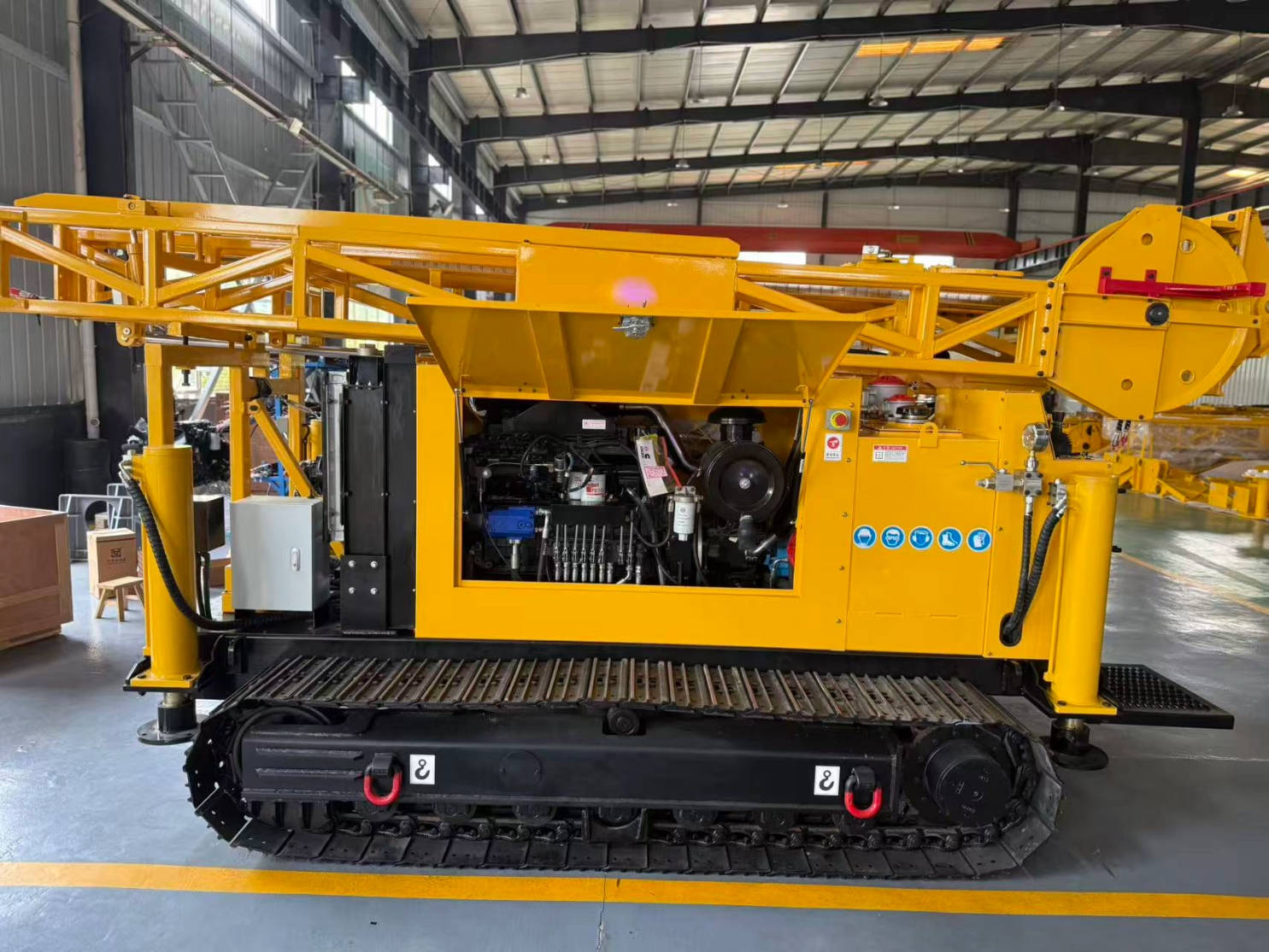
Once diamond drilling is justified, equipment selection should follow the geological brief.
For a CORTECH surface core drilling rig, the purchasing discussion should establish:
- Target depth and required core size.
- Torque and rotational-speed requirements.
- Feed, pullback, and lifting capacity.
- Wireline retrieval requirements.
- Expected ground conditions and drilling angle.
- Fluid-system needs.
- Transport restrictions and site access.
- Consumables, maintenance, training, and service requirements.
The supplied company background identifies CORTECH as a developer, manufacturer, and seller of fully hydraulic wireline diamond core drilling equipment. It does not establish model-specific capacities or performance guarantees.
Those details should be confirmed in the technical proposal. Rig specifications must also be matched with tooling, operator competence, and the sampling plan.

Neither diamond core drilling nor conventional rock drilling is automatically safer or more environmentally responsible in every setting.
Both require site-specific controls for moving machinery, drill-string handling, stored energy, and access around operating equipment.
Air-based methods require attention to dust, noise, and compressed-air hazards. Fluid-based drilling requires planning for water supply, circulation, spill prevention, and fluid disposal.
The comparison should include permitting, local water availability, site footprint, and rehabilitation—not merely fuel consumption or drilling speed.
Select the drilling method that delivers the evidence your next decision requires. Use core where geological relationships and suitable test specimens matter; consider dedicated non-core sampling where efficient coverage meets the program's objectives.
Contact CORTECH with your target depth, required core size, formation conditions, drilling angle, water availability, and site-access constraints. Request a project-specific surface core drilling proposal covering equipment configuration, tooling compatibility, operational requirements, and support scope.
Diamond drilling is generally better for preserving geological relationships and supporting structural interpretation. Dedicated RC drilling can be more economical for representative interval sampling. The better method depends on the information required and demonstrated sample quality.
Yes, when the sampling program produces sufficiently reliable and representative data for its intended use. Recovery, splitting, contamination, surveys, and analytical controls must be evaluated. RC samples are not acceptable solely because they came from an exploration rig.
No. Wireline retrieval normally allows the inner tube to be recovered without pulling the whole drill string each time. Rod removal remains necessary for operations such as changing the bit or addressing some downhole problems.
Diamond core drilling often provides better boundary resolution because geologists can identify contacts and select corresponding sample intervals. Suitable orientation procedures can also help interpret vein geometry. Reliable recovery remains essential.
No. Drilling can break, wash, or lose material. Geological relationships may remain interpretable, but sample quality depends on formation conditions, equipment selection, drilling practices, and handling.
Start with depth, core size, ground conditions, hole angle, access, and sampling objectives. Then assess the proposed rig's verified operating specifications, tooling compatibility, retrieval system, maintenance requirements, and support arrangements.
1. - Canadian Institute of Mining, Metallurgy and Petroleum. CIM Mineral Exploration Best Practice Guidelines, adopted November 23, 2018. Sections 6–7 support the discussion of drilling-method selection, oriented core, sample intervals, retained material, surveys, sample preparation, and analytical controls. [mrmr.cim]
2. - René Sterk and Duncan Franey. RC Drilling & Sampling: Optimising the Quantity–Quality Balance, 2017 manuscript. Supports the comparisons of RC productivity and geological detail, boundary resolution, fines loss, wet sampling, splitting errors, quality clauses, and real-time sample-mass monitoring. [rscmme]
3. - WorkSafe Western Australia. Mineral Exploration Drilling: Code of Practice. Supports the description of wireline inner-tube recovery and the need for mineral-exploration drilling safety planning. [worksafe.wa.gov]
4. - U.S. Geological Survey. Application of Drilling, Coring, and Sampling Techniques to Test Holes and Wells. Provides background on drilling circulation, cuttings collection, and the influence of drilling practices on sample disturbance and contamination. [pubs.usgs]
5. - CORTECH company description supplied for this article. Used only for the company's stated manufacturing focus. No independent model specifications, customer results, certifications, or performance data were supplied.
6. - Editorial analysis: the cost-per-usable-metre framework, illustrative staged program, and purchasing checklist are planning interpretations—not measured CORTECH performance claims or documented customer case studies.


