
Views: 238 Author: CORTECH Publish Time: 2026-09-22 Origin: Site


Content Menu
● What Is the Difference Between Hydraulic and Mechanical Core Drilling?
● Hydraulic Core Drilling Machine Overview
>> Key Features of a Hydraulic Core Drilling Machine
>> Why Hydraulic Control Matters in Hard Rock
● Mechanical Core Drill Overview
>> Typical Characteristics of Mechanical Core Drills
● Hydraulic vs. Mechanical Core Drill Comparison
● Performance in Hard Rock Formations
>> Rotation, Torque, and Feed Balance
● Core Recovery and Geological Data Quality
>> How Hydraulic Rigs Support Better Core Recovery
● Operational Safety and Crew Ergonomics
>> Safety Advantages of Hydraulic Core Drilling
● Cost Analysis: Purchase Price vs. Cost per Meter
>> When a Hydraulic Rig Creates Better Project Economics
>> When a Mechanical Core Drill Still Makes Sense
● Expert Selection Checklist for Hard Rock Projects
● Practical Operating Steps for Hard Rock Drilling
>> 1. Match the Diamond Bit to the Formation
>> 2. Inspect the Entire Drilling System
>> 3. Establish Conservative Initial Parameters
>> 4. Maintain Adequate Flushing
>> 5. Monitor Drilling Signals Continuously
>> 7. Review Daily Performance Data
● FAQ
>> 1. What is the main advantage of a hydraulic core drilling machine?
>> 2. Is a hydraulic core drilling machine better for deep holes?
>> 3. Can a mechanical core drill drill granite or quartzite?
>> 4. Does hydraulic drilling improve core recovery?
>> 5. What is wireline core drilling?
>> 6. Is a hydraulic core drilling machine more expensive than a mechanical core drill?
>> 7. Which rig is best for mineral exploration drilling?
When drilling granite, basalt, quartzite, or other abrasive hard rock formations, the difference between a hydraulic core drilling machine and a mechanical core drill affects far more than drilling speed. It influences core recovery, borehole quality, crew safety, operating cost, maintenance workload, and the reliability of geological data used for exploration or geotechnical decisions.
For deep mineral exploration, site investigation, and demanding hard rock coring projects, a full-hydraulic wireline diamond drilling rig generally provides superior control over rotation, feed pressure, pullback, and core retrieval. Mechanical core drills can still be practical for shallow, simple, budget-sensitive projects, but their limitations become increasingly visible as rock hardness, hole depth, deviation, and sampling requirements increase. Diamond core drilling is widely used in mining and geotechnical work because it produces intact rock samples that support detailed interpretation of lithology, fractures, mineralization, alteration, and rock mechanics.

A hydraulic core drilling machine uses hydraulic power to drive key rig functions. These functions can include spindle rotation, feed, pullback, hoisting, rod clamping, mast movement, and crawler travel. The operator controls drilling parameters from a centralized console, allowing smoother adjustments during changing ground conditions.
A mechanical core drill relies more heavily on mechanical transmissions, gearboxes, belts, chains, friction clutches, shafts, and manually operated systems. The power path is more direct and often simpler, but it may provide less precise adjustment of feed force and rotational performance under variable drilling loads.
In hard rock formations, drilling performance depends on balancing three critical variables:
- Rotation speed
- Torque
- Feed pressure
- Flushing and cooling performance
If these variables are not matched to the bit, rock formation, and borehole condition, the consequences may include premature diamond bit wear, poor penetration rate, borehole deviation, broken rods, stuck tools, and fractured core.
A full-hydraulic core drilling rig gives the driller more precise control over these variables. This is particularly important when using impregnated diamond bits in hard, abrasive formations, where stable feed and adequate circulation are essential for exposing new diamonds and preventing excessive heat buildup.
A modern hydraulic core drilling machine is designed to convert engine or electric motor output into controlled hydraulic force. Hydraulic motors, pumps, cylinders, valves, and hoses work together to deliver adjustable power to multiple rig systems.
For a professional drilling contractor, the key advantage is not simply "more power." The real benefit is controlled power.
In difficult formations, a drill rig must respond quickly when the bit moves from fractured rock into fresh granite, from soft fault material into abrasive quartzite, or from stable ground into broken zones. A hydraulic system allows the operator to reduce feed, change rotation, adjust pullback, or control pressure without relying on coarse mechanical adjustments.
A typical full-hydraulic wireline diamond core drilling rig may include:
- Hydraulic rotary head with adjustable speed and torque
- Hydraulic feed cylinder for controlled bit pressure
- Hydraulic chuck and rod holder
- Hydraulic main winch and wireline winch
- Hydraulic mast raising and lowering system
- Hydraulic crawler travel system
- Centralized control station
- Pressure gauges and monitoring instruments
- Safety valves and emergency-stop functions
- Wireline coring capability for faster core retrieval
The wireline system is especially valuable in deeper holes. Instead of pulling the entire drill string every time the core barrel is full, the crew retrieves only the inner tube through the drill rods using an overshot and cable. The rods remain in the borehole, reducing non-productive time and manual rod handling.
Hard rock drilling is not a constant-load process. Even within one borehole, the driller may encounter:
- Massive granite
- Quartz veins
- Highly fractured zones
- Abrasive sandstone layers
- Altered mineralized zones
- Faults containing clay or broken rock
- Water-bearing fractures
A hydraulic system makes it easier to apply consistent feed pressure while maintaining stable rotation. This helps the diamond bit cut efficiently rather than burn, glaze, vibrate, or stall.
For hard rock diamond drilling, downward pressure and fluid circulation must be monitored carefully because they directly affect penetration performance and core recovery.
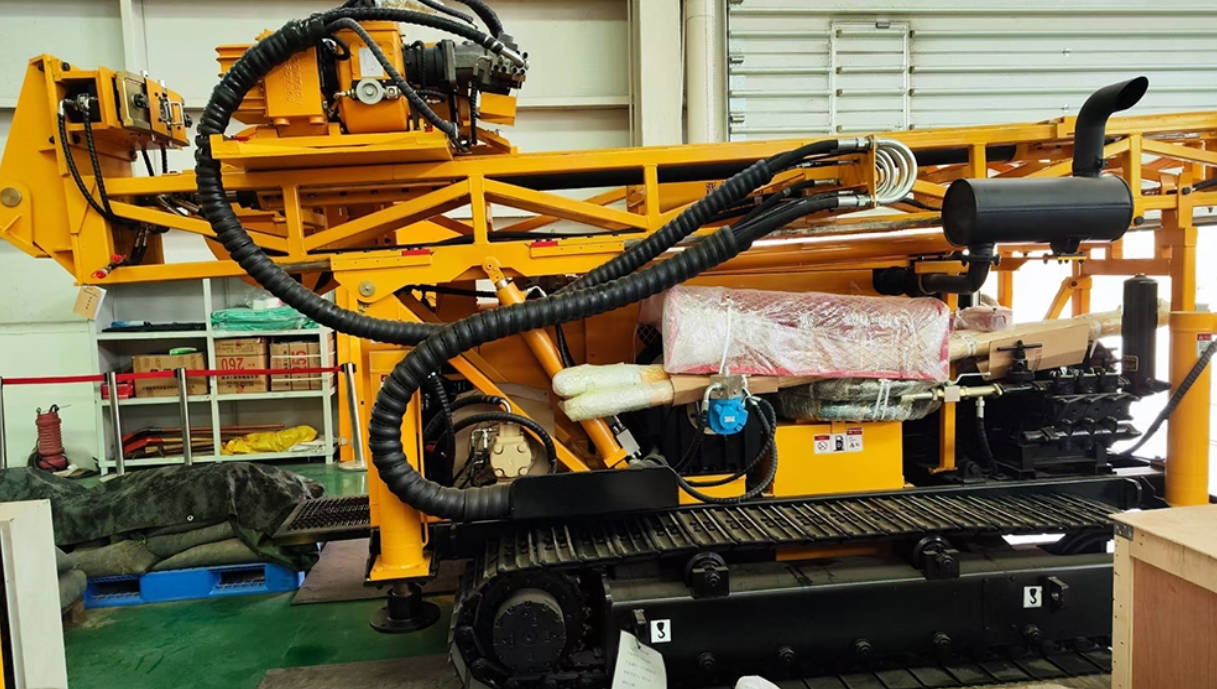
A mechanical core drill typically uses a mechanical transmission system to transfer power from an engine or motor to the drilling spindle. Depending on the design, it may use gearboxes, belts, chains, clutches, shafts, and manual levers for speed selection and feed control.
Mechanical rigs have been used for decades in mineral exploration, engineering investigation, quarrying, and water-related drilling work. Their durability and simpler construction can make them appealing to contractors who work on shallow holes, operate in regions with limited service infrastructure, or require a lower initial investment.
However, "simple" does not always mean "better" for deep hard rock coring.
Mechanical core drills commonly offer:
- Basic mechanical gear changes
- Manual or semi-manual feed adjustment
- Mechanically driven spindle rotation
- Conventional rod handling
- Lower electronic or hydraulic system complexity
- Lower initial machine cost in some configurations
- Familiar operation for crews trained on legacy rigs
For shallow and relatively uniform drilling conditions, a mechanical core drill can provide acceptable performance. It may be a practical option when the hole is short, the core quality requirement is moderate, and the drilling program does not justify the investment in advanced wireline and hydraulic systems.
The trade-off is reduced responsiveness. In hard rock formations, slower or less precise control can create additional wear on bits, rods, couplings, and mechanical drive components.
The table below summarizes the most important differences for hard rock drilling applications.
| Comparison Factor | Hydraulic Core Drilling Machine | Mechanical Core Drill |
|---|---|---|
| Power transmission | Hydraulic pumps, motors, valves, and cylinders | Gearboxes, shafts, belts, chains, clutches |
| Feed control | Smooth, adjustable, and highly responsive | Often more manual, stepped, or less precise |
| Rotation control | Variable speed and torque control | Fixed or limited mechanical gear ranges |
| Hard rock adaptability | Excellent for changing rock conditions | Better for stable and predictable formations |
| Deep-hole capability | Strong suitability for deep wireline coring | More limited as depth and rod load increase |
| Wireline integration | Common on modern full-hydraulic rigs | May be unavailable or less optimized |
| Core recovery potential | High when properly operated and tooled | Can decline when vibration and feed control are poor |
| Rod handling safety | Reduced manual work with hydraulic clamps and winches | More manual handling may be required |
| Initial purchase cost | Usually higher | Often lower |
| Maintenance approach | Requires hydraulic-system knowledge and clean oil management | Requires mechanical adjustment, lubrication, and parts inspection |
| Productivity potential | High, especially in long or deep drilling programs | Moderate for shallow or low-complexity work |
| Best application | Deep exploration, hard rock, geotechnical drilling, wireline coring | Shallow holes, simple projects, lower-budget programs |
The most important conclusion is this: the better rig is not always the one with the lowest purchase price. The right choice depends on total cost per recovered meter of quality core.
Hard rock drilling requires more than high torque. It requires a drilling system that can maintain stability while the bit cuts through abrasive and variable materials.
A hard formation often causes:
- High bit wear
- Heat buildup at the cutting face
- Torque spikes
- Reduced penetration rate
- Increased vibration
- Core breakage
- Borehole deviation
- Rod and coupling fatigue
- Greater risk of stuck tools
A hydraulic core drilling machine is well suited to managing these risks because the operator can adjust feed force and rotation more smoothly. When the bit begins to bind or when drilling pressure rises unexpectedly, hydraulic pullback and feed adjustment can reduce damage before a small issue becomes a major downhole incident.
A common mistake in hard rock drilling is assuming that maximum feed pressure produces maximum penetration. In reality, excessive feed may overload the bit and prevent efficient cutting action.
For diamond coring, the objective is to maintain a stable cutting environment:
Effective Hard Rock Drilling=Correct Bit+Controlled Feed+Stable Rotation+Reliable Flushing
A hydraulic rig helps the operator maintain this balance. Controlled hydraulic feed can reduce sudden loading, while adjustable rotation allows the driller to respond to bit wear, rock abrasiveness, and borehole conditions.
Mechanical rigs can achieve good results when operated by experienced crews, but their control response may be less refined. This can be a disadvantage in long, deep, or geologically complex boreholes.
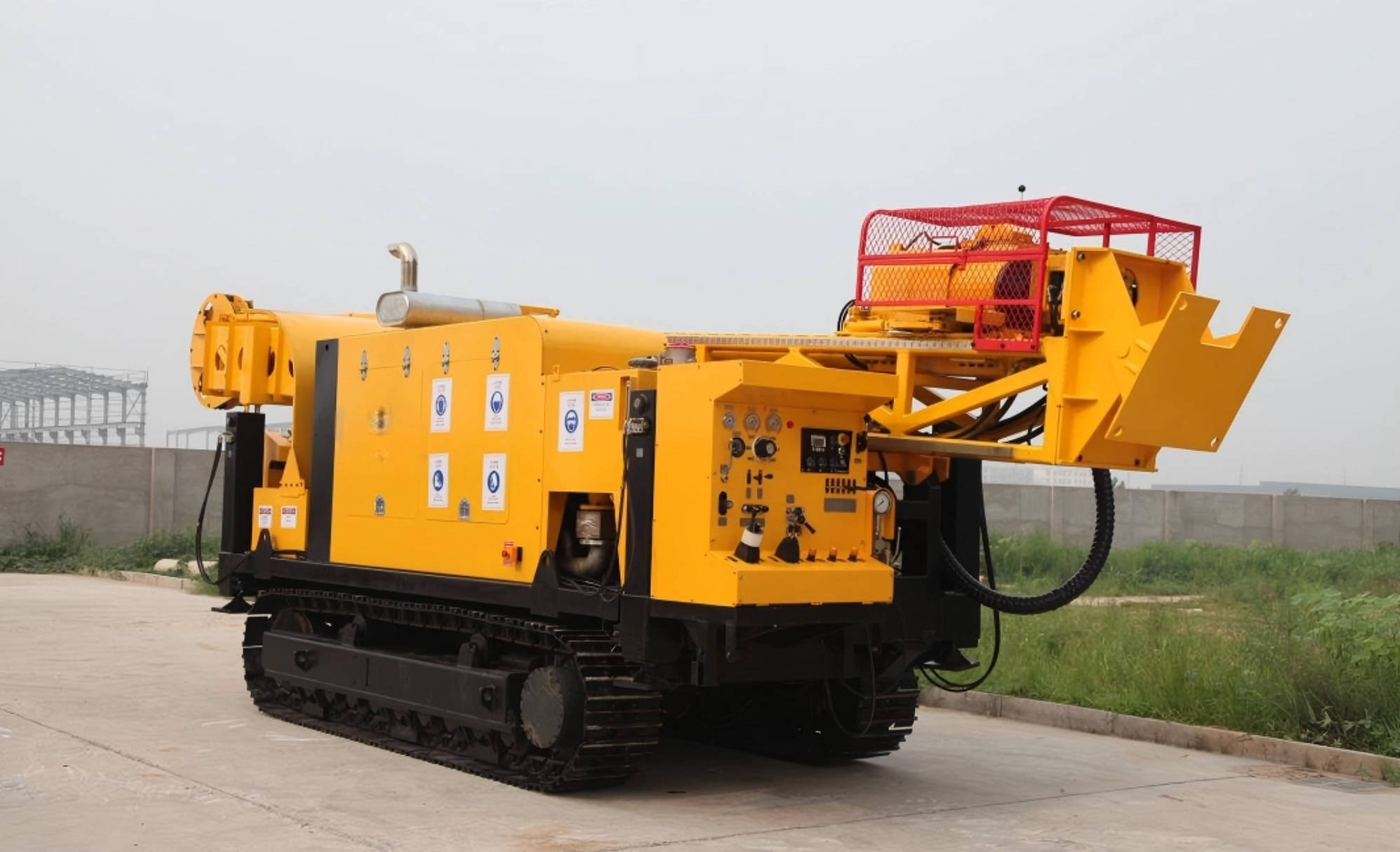
For exploration and geotechnical programs, the drill rig does not only create a hole. It produces evidence.
Geologists rely on recovered core to evaluate:
- Rock type and lithology
- Mineralization
- Vein systems
- Alteration zones
- Fracture frequency
- Rock quality designation
- Fault structures
- Groundwater features
- Geotechnical strength indicators
Poor core recovery can create uncertainty in geological models and engineering decisions. A fractured, washed, or incomplete core sample may hide critical structural information.
Diamond core drilling is preferred in hard-rock exploration and geotechnical drilling because it produces high-quality core suitable for detailed logging and structural interpretation.
A hydraulic core drilling machine can help protect core quality through:
- More stable feed pressure
- Reduced vibration
- Controlled rotation
- Smooth pullback response
- Better management of torque changes
- Efficient wireline retrieval
- Reduced rod movement during core recovery
Wireline coring can be especially valuable in deeper holes because the drill string stays in the hole while the inner tube is recovered. This reduces repeated tripping time and can lower manual handling exposure.
However, a hydraulic rig alone does not guarantee excellent core recovery. The drilling team must also select the correct bit, core barrel, reaming shell, drilling fluid, and operating parameters.
Safety should be part of the drilling-method comparison, not an afterthought.
Mechanical drilling rigs can require more direct physical interaction with rotating components, rod strings, winches, clutches, and manual handling systems. Where manual rod handling is frequent, the risks of pinch points, crush injuries, dropped objects, and ergonomic strain may increase.
A full-hydraulic core drilling machine can reduce exposure through hydraulic rod holders, hydraulic chucks, controlled winches, remote or centralized controls, and automated or semi-automated mast functions.
A properly designed hydraulic drilling system can support safer drilling through:
- Reduced manual rod handling
- Controlled chucking and breakout operations
- Smoother winch operation
- More predictable feed and pullback
- Emergency stop systems
- Centralized operator controls
- Less reliance on exposed belts or rotating mechanical components
Modern full-hydraulic core drills are often recognized for centralized control, multi-function operation, strong output in difficult formations, and improved safety in harsh drilling environments.
Safety still depends on crew training, preventive maintenance, guarding, lockout procedures, communication, and site supervision. No drilling rig should be considered "safe" simply because it is hydraulic.
A mechanical core drill may appear more affordable at the purchasing stage. For a small contractor or a short drilling project, this can be an important advantage.
But drilling managers should not evaluate equipment only by initial price. A more useful calculation is:
Cost per Recovered Meter=Total Project Cost/Recovered Meters of Usable Core
Total project cost includes more than rig ownership. It also includes:
- Labor
- Fuel or electricity
- Diamond bit consumption
- Drill rod wear
- Downtime
- Repair costs
- Core recovery losses
- Re-drilling requirements
- Consumables
- Mobilization
- Safety incidents
- Delayed geological decisions
A hydraulic core drilling machine may have a higher capital cost, but it can create better long-term economics when it delivers:
- Higher productive drilling hours
- Faster wireline core retrieval
- Better core recovery
- Less time tripping rods
- Lower risk of downhole failures
- Reduced manual labor intensity
- More consistent bit performance
- Improved performance in deep hard rock holes
For a deep exploration program, even small improvements in daily production can compound across hundreds or thousands of meters.
A mechanical core drill may remain a reasonable choice when:
- Hole depths are shallow
- Rock conditions are consistent
- The drilling schedule is limited
- Wireline coring is unnecessary
- Capital budget is extremely restricted
- Local maintenance support favors mechanical systems
- The crew already has strong experience with the selected rig
The practical decision should be based on project conditions rather than marketing claims.
Before choosing between a hydraulic core drilling machine and a mechanical core drill, ask the following questions.
1. What is the planned hole depth, diameter, and angle?
2. What hard rock types are expected, including granite, basalt, quartzite, or abrasive mineralized zones?
3. Is wireline core retrieval required to maintain productivity at depth?
4. What core recovery percentage is needed for geological or geotechnical interpretation?
5. How frequently will the rig encounter fractured, faulted, or water-bearing formations?
6. Does the drilling contractor need hydraulic rod handling to improve safety and reduce manual labor?
7. What level of local service, spare parts, and technical support is available?
8. Will the rig be used for multiple projects with different depths and formation conditions?
9. What is the expected cost of downtime per day?
10. Is the decision being made based on purchase price or lifecycle productivity?
For long-term exploration and demanding geotechnical applications, these questions often lead to the same conclusion: a robust full-hydraulic wireline diamond core drilling rig offers a stronger operational platform.
Whether using a hydraulic core drilling machine or a mechanical core drill, disciplined operation is essential.
Select a bit based on rock hardness, abrasiveness, fracture condition, and expected drilling fluid environment. Bit selection should never be based solely on the previous project.
Check rods, threads, core barrel components, reaming shell, water swivel, hoses, clamps, winches, and safety guards before drilling begins.
Start with moderate feed pressure and rotation. Observe torque, flushing returns, vibration, and penetration behavior before increasing drilling intensity.
Drilling fluid cools the diamond bit, removes cuttings, supports borehole cleaning, and helps prevent bit glazing. Poor flushing can quickly damage expensive drilling tools.
Watch for abnormal pressure, torque fluctuation, reduced penetration, water loss, vibration, or changing returns. These can indicate bit wear, fractured ground, blockage, or a developing downhole problem.
Use wireline retrieval correctly and inspect the recovered core immediately. Record recovery, core condition, fractures, losses, and any evidence of ground instability.
Track meters drilled, bit life, core recovery, downtime, fuel use, rod failures, and maintenance events. These records help optimize future drilling parameters.

For hard rock formations, a hydraulic core drilling machine is generally the stronger choice when the project requires deep holes, stable drilling performance, high-quality core, wireline efficiency, reduced manual handling, and lower long-term operating risk.
A mechanical core drill can still serve shallow or low-complexity projects, particularly where purchase budget and mechanical simplicity are the main priorities. But when drilling conditions become deeper, harder, more abrasive, or more geologically variable, the advantages of full hydraulic control become increasingly important.
CORTECH designs and manufactures CORE SURFACE DRILL and other full-hydraulic wireline diamond core drilling solutions for professional exploration and geotechnical drilling environments. A properly specified drilling rig, combined with the right diamond tooling and operating practice, can help contractors recover more reliable core, improve drilling efficiency, and make better decisions from every meter drilled.
CTA: Contact CORTECH to discuss your hole depth, drilling diameter, formation hardness, site conditions, and core recovery goals. Our technical team can help you identify a suitable full-hydraulic wireline diamond core drilling rig configuration for your hard rock drilling project.
The main advantage is precise control of rotation, torque, feed pressure, pullback, and rod handling. This control is especially valuable in hard rock formations where drilling conditions can change quickly.
Yes. Full-hydraulic wireline diamond core drilling rigs are generally better suited to deep holes because wireline retrieval reduces the need to pull the entire drill string for every core run. This can improve productivity and reduce manual rod handling.
Yes. A mechanical core drill can drill granite, quartzite, and other hard formations when it uses suitable diamond tooling and is operated correctly. However, it may provide less flexible control than a modern hydraulic rig.
Hydraulic drilling can support better core recovery by providing smoother feed, more stable rotation, reduced vibration, and controlled pullback. Core recovery also depends on bit selection, core barrel design, drilling fluid, formation condition, and operator skill.
Wireline core drilling is a coring method in which the inner tube carrying the rock core is retrieved through the drill rods using a cable and overshot. The drill rods remain in the borehole, which reduces tripping time.
Usually, yes. Hydraulic rigs commonly have a higher initial purchase price because they include hydraulic pumps, motors, valves, cylinders, control systems, and often wireline-compatible functions. However, they may offer a lower cost per recovered meter on demanding long-term projects.
For deep or demanding hard-rock mineral exploration, a full-hydraulic wireline diamond core drilling rig is often the preferred choice because it supports efficient core retrieval, stable drilling parameters, safety, and high-quality geological samples.
1. Epiroc. "Diamond Driller's Technical Book." [Read the technical guide]
2. Cascade Environmental. "Diamond Core Drilling Technologies." [Read the article]
3. TM Global Manufacturing. "Wireline Core Drilling: How the System Actually Works." [Read the article]
4. Drillmaster Group. "The Four Typical Core Drilling Rigs." [Read the article]
5. Litech Tools. "What Is Core Drilling in Mining?" [Read the article]
6. CORTECH Drilling. "Reaching Greater Rock Coring Depths With Modern Hydraulic Core Rigs: A Field Engineer's Perspective." [Read the article]
7. Mitti. "Core Drilling: What Is It and How Does It Work?" [Read the article]


