
Views: 249 Author: CORTECH Publish Time: 2026-08-03 Origin: Site


Content Menu
● Small-scale prospecting explained
>> Typical goals of prospecting
● Large-scale mine development explained
>> Typical goals of mine development
>> 2. Match rig class to project stage
>> 3. Build support before adding rigs
>> 5. Use data to decide when to expand
● Latest industry insight: why hydraulic systems matter
● The best fleet is stage-aware
● Operational checklist for scaling
● FAQ
>> 1. What is the main difference between small-scale prospecting and large-scale mine development?
>> 2. Can one drill rig support both stages?
>> 3. When should a company expand its drilling fleet?
>> 4. Why is core recovery so important in both stages?
>> 5. What is the biggest mistake in fleet scaling?
>> 6. Why are hydraulic drill rigs increasingly preferred?
In mining, the leap from small-scale prospecting to large-scale mine development is not just a matter of size. It changes everything: drill selection, fleet planning, logistics, sample quality expectations, safety standards, and capital allocation. For operators using CORE SURFACE DRILL and other fully hydraulic wireline diamond drill rigs, the right scaling strategy can determine whether a project stays lean and agile or becomes a high-output, multi-rig development program.
From an industry perspective, I've seen one mistake repeated across projects: teams often buy equipment for the project they have today, not the project they are likely to have 12 to 24 months from now. That gap is where cost overruns, underutilized rigs, and slow decision-making begin. The smarter path is to align the fleet with the stage of the project, the geology, and the long-term development roadmap.
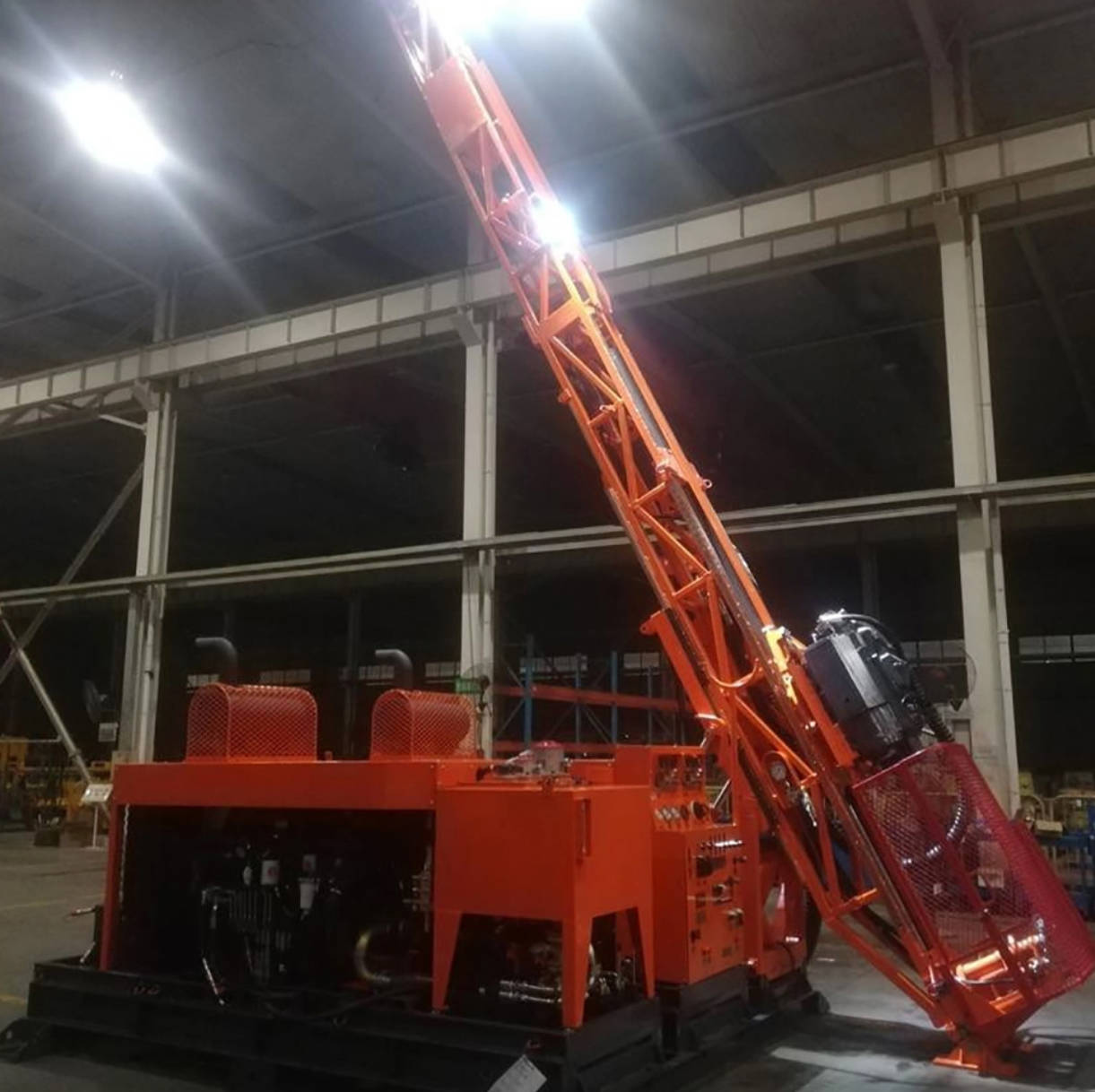
Small-scale prospecting and large-scale mine development are different business models, not just different drilling programs. Prospecting is usually about reducing uncertainty, testing targets, and validating geological assumptions. Mine development, by contrast, is about moving from discovery to repeatable production, where speed, consistency, and data reliability become much more important than one-off flexibility.
That difference directly affects fleet design. A small exploration team may need one highly mobile rig, a compact support truck, and a lean crew. A large mine development program may need multiple rigs, standardized consumables, staged maintenance schedules, spare parts inventory, and a stronger field logistics system. The fleet becomes part of the mine's operating engine, not just a scouting tool.
Small-scale prospecting is the early-stage work that helps companies identify mineralized zones, test anomalies, and decide where deeper drilling should happen. It is usually information-driven, not tonnage-driven. The priority is to learn fast, spend carefully, and preserve flexibility.
- Confirm whether a target has economic potential.
- Map lithology, structure, alteration, and mineralization.
- Identify drill collars for follow-up work.
- Reduce geological uncertainty before heavier capital is committed.
A prospecting fleet usually emphasizes:
- Mobility, so crews can move between targets quickly.
- Lower operating footprint, to reduce logistics pressure.
- Flexible drill configurations, to handle changing ground conditions.
- High-quality core recovery, because every sample matters.
For this phase, a fully hydraulic wireline diamond drill rig is often the right choice because it balances portability, depth capability, and core quality. That is especially true when the project needs reliable data rather than bulk output.
Large-scale mine development is the phase where drilling supports mine planning, reserve conversion, geotechnical confidence, and operational continuity. The objective is no longer just to find ore. It is to define, de-risk, and prepare ore for production at scale.
- Convert inferred resources into higher-confidence categories.
- Support pit design, underground layout, or sequencing.
- Strengthen geotechnical and hydrogeological understanding.
- Maintain production scheduling and expansion planning.
A development fleet is usually built around:
- Multi-rig capacity for faster drill-meter delivery.
- Standardized maintenance to reduce downtime.
- Data consistency across rigs, crews, and shifts.
- Strong support infrastructure, including water, fuel, parts, and transport.
At this stage, fleet planning becomes a systems problem. Every delay affects downstream mine design, capital expenditure timing, and production readiness. This is where equipment reliability and fleet discipline matter as much as drilling speed.
| Factor | Small-Scale Prospecting | Large-Scale Mine Development |
|---|---|---|
| Main objective | Identify targets and reduce uncertainty | Convert geology into mine-ready decisions |
| Decision pace | Fast, experimental, iterative | Structured, staged, and capital-sensitive |
| Fleet size | Usually one to a few rigs | Multiple rigs and support units |
| Mobility need | Very high | Moderate to high, depending on site layout |
| Sample priority | Accuracy and recovery | Consistency, speed, and repeatability |
| Crew structure | Lean and flexible | Specialized and standardized |
| Risk profile | Geological uncertainty | Operational and scheduling complexity |
| Equipment focus | Versatility and portability | Reliability, uptime, and fleet integration |
This comparison shows why the same rig may perform well in both contexts, but the fleet strategy must change as the project matures.
Scaling a drilling fleet is not about buying more rigs too early. It is about matching equipment to project maturity, terrain, and data requirements. In practice, the best scale-up programs follow a staged path.
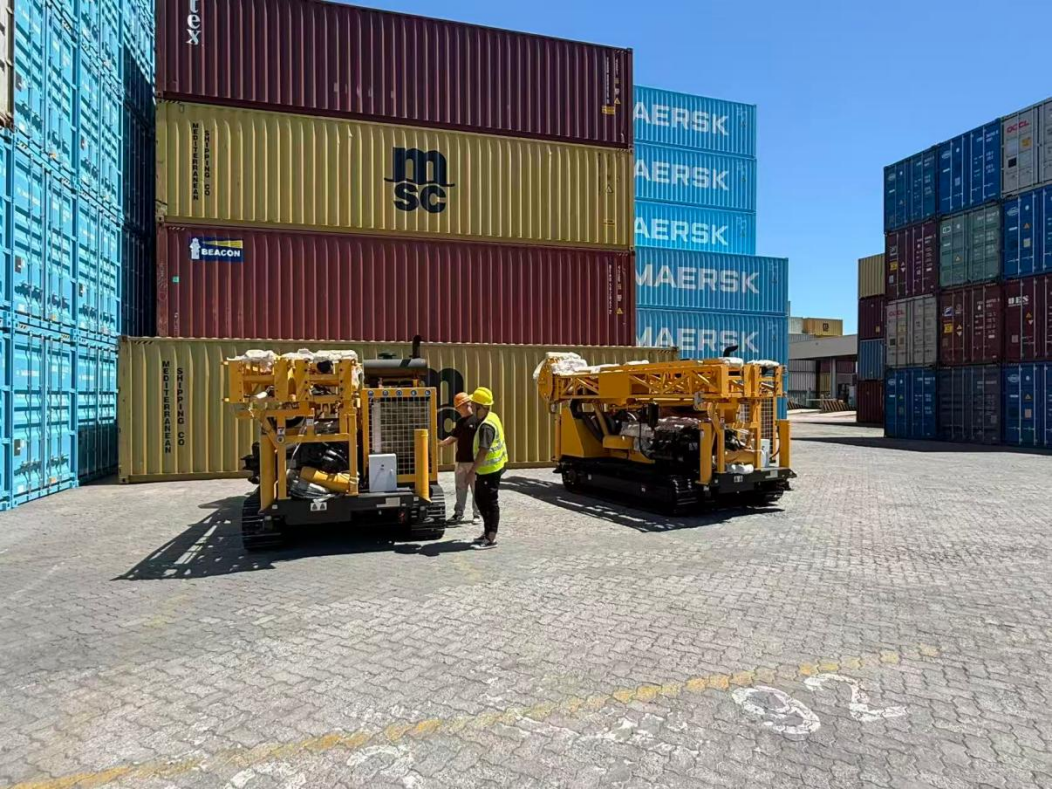
Before expanding the fleet, evaluate:
- Rock hardness and abrasiveness.
- Hole depth requirements.
- Expected core recovery challenges.
- Water conditions and ground stability.
- Access constraints and seasonal weather.
These inputs determine whether your next purchase should prioritize torque, mast strength, rod handling, depth range, or transportability.
For early prospecting, a compact and versatile core drill rig is often enough. For development, you need a rig that can support heavier workloads and longer campaigns with predictable output. In many cases, fully hydraulic wireline diamond drill rigs offer a strong balance between sample quality and operational efficiency, making them suitable for both stages when properly configured.
A common scaling error is adding rigs without adding enough support. Before fleet expansion, confirm that you have:
- Spare parts inventory.
- Trained maintenance technicians.
- Water supply and borehole management.
- Fuel and transport capacity.
- Core logging, storage, and chain-of-custody systems.
Without support infrastructure, more rigs simply create more downtime.
Standardization improves efficiency. If every rig uses a different operating logic, different consumables, and different maintenance habits, your crew will spend more time coordinating than drilling. A standardized fleet is easier to train, easier to maintain, and easier to scale.
Expansion should be based on measurable indicators, not intuition alone. Track:
- Meterage per rig per shift.
- Downtime by cause.
- Core recovery percentage.
- Cost per meter.
- Sample turnaround time.
- Maintenance frequency.
If the numbers show that one rig is consistently maxed out and support systems are stable, that is the time to scale.
Across drilling and rock equipment markets, the shift toward hydraulic drill rigs, automation, and smarter monitoring is shaping purchasing decisions. Market research points to continued growth in drilling equipment demand and rising interest in hydraulic systems because they support efficiency, control, and compatibility with modern drilling workflows.
For mining operators, this matters because hydraulic systems tend to improve control under tough ground conditions and allow fleets to stay productive in harder rock, remote sites, and deeper programs. That makes them especially relevant for companies that want to bridge prospecting and development without rebuilding their fleet from scratch.
In my view, the strongest mining fleets are stage-aware. They are not built around a single machine brochure or a one-time budget. They are built around the life cycle of the project.
A stage-aware fleet asks three questions:
1. What do we need to know right now?
2. What will we need to prove next?
3. What support system will let us drill longer with less friction?
When teams answer those questions honestly, they avoid overbuying early and underpreparing later. That is where operational maturity begins.

Use this checklist before adding the next rig:
- Confirm the next phase of drilling targets is already defined.
- Verify that logistics can support longer campaigns.
- Train crews on consistent core handling and reporting.
- Align procurement with maintenance cycles.
- Review safety procedures for higher utilization.
- Set fleet KPIs before the expansion begins.
This step-by-step approach helps turn fleet expansion into a controlled business decision, not a reactive purchase.
For operators working with CORE SURFACE DRILL and fully hydraulic wireline diamond drilling solutions, the strategic value is clear: one platform can support multiple project phases when it is chosen and configured correctly. That gives exploration teams the flexibility to prospect efficiently while leaving room to grow into a development-ready fleet later.
For manufacturers like CORTECH, the message is equally important: buyers do not just want a machine. They want a drilling platform that can help them move from discovery to development with fewer equipment changes, lower risk, and better sample integrity.
If your project is moving from exploration into development, the next step is not simply buying more equipment. It is choosing a drilling fleet strategy that matches your geology, budget, and growth timeline.
Contact CORTECH to discuss a core drilling solution that can support both small-scale prospecting and large-scale mine development.
Small-scale prospecting focuses on finding and testing targets, while large-scale mine development focuses on preparing a deposit for efficient production and long-term planning.
Yes. A well-chosen fully hydraulic wireline diamond drill rig can often support both stages if it offers the right depth range, mobility, and reliability.
A company should expand when the current rig is consistently near capacity, support systems are stable, and the next phase of drilling is clearly defined.
Core recovery affects the quality of geological interpretation. Better recovery means better decisions for target selection, resource definition, and mine planning.
The biggest mistake is adding rigs before adding enough support capacity, such as technicians, spare parts, water systems, logistics, and maintenance planning.
Hydraulic drill rigs are valued for control, efficiency, and adaptability, especially in hard-rock, remote, or high-demand drilling programs.
1. - [Wireline core drilling] [epiroc]
2. - [Wireline Diamond Fully Hydraulic Coring Drilling Rig for prospecting] [m.made-in-china]
3. - [CSD500C Operation Manual.pdf - Beijing Cortech Drilling] [coursehero]
4. - [Wireline core drilling for mining excavations and research] [massenzarigs]
5. - [Phases of Mining] [resourcecapitalfunds]
6. - [Mineral Exploration and Development, Guideline] [mmsd.nrcan-rncan.gc]
7. - [The Mineral Exploration Process: 8 Steps To Navigating] [minrom]
8. - [What is wire-line core drilling?] [miningdoc]
9. - [Mineral Development: A Short Guide to Understanding the] [newagemetals]
10. - [Wireline Core Drilling Tool Working Principle & Component] [youtube]
11. - [The Mining Lifecycle] [mines.nrs.gov.bc]


