
Views: 259 Author: CORTECH Publish Time: 2026-08-07 Origin: Site


Content Menu
● What Is Underground Grouting?
● What Is Surface Core Drilling?
● Underground Grouting vs. Surface Core Drilling at a Glance
● Specialized Equipment for Underground Grouting
>> Core Components of a Grouting System
>> What Makes Grouting Equipment Specialized?
● Specialized Equipment for Surface Core Drilling
>> Essential Surface Core Drilling Equipment
>> Why Full-Hydraulic Wireline Core Rigs Matter
● Operating Principles: Injection vs. Investigation
● How to Select the Right Equipment
>> Step 1: Define the Decision You Need to Make
>> Step 2: Match Equipment to Site Constraints
>> Step 3: Build a Complete Equipment Package
● The Smarter Project Workflow: Drill First, Treat Second
● Why Equipment Quality Affects Project Economics
● Choose the Right System for Your Next Project
● FAQ
>> 1. Is underground grouting the same as core drilling?
>> 2. Can a surface core drill be used for grouting holes?
>> 3. What is a wireline diamond core drilling rig?
>> 4. Why is core recovery important in surface drilling?
>> 5. What equipment is needed for underground grouting?
>> 6. How do I choose a surface core drilling rig?
>> 7. Can core drilling data improve grouting design?
Underground grouting and surface core drilling are often discussed within the same mining, tunneling, and geotechnical projects. However, they serve fundamentally different purposes. Underground grouting improves ground conditions by injecting engineered materials, while surface core drilling retrieves representative rock core to define geology before critical decisions are made.
For exploration managers, tunnel contractors, and geotechnical engineers, selecting the correct equipment is not simply a purchasing decision. It directly affects data quality, ground-control outcomes, crew safety, project schedules, and total drilling cost.
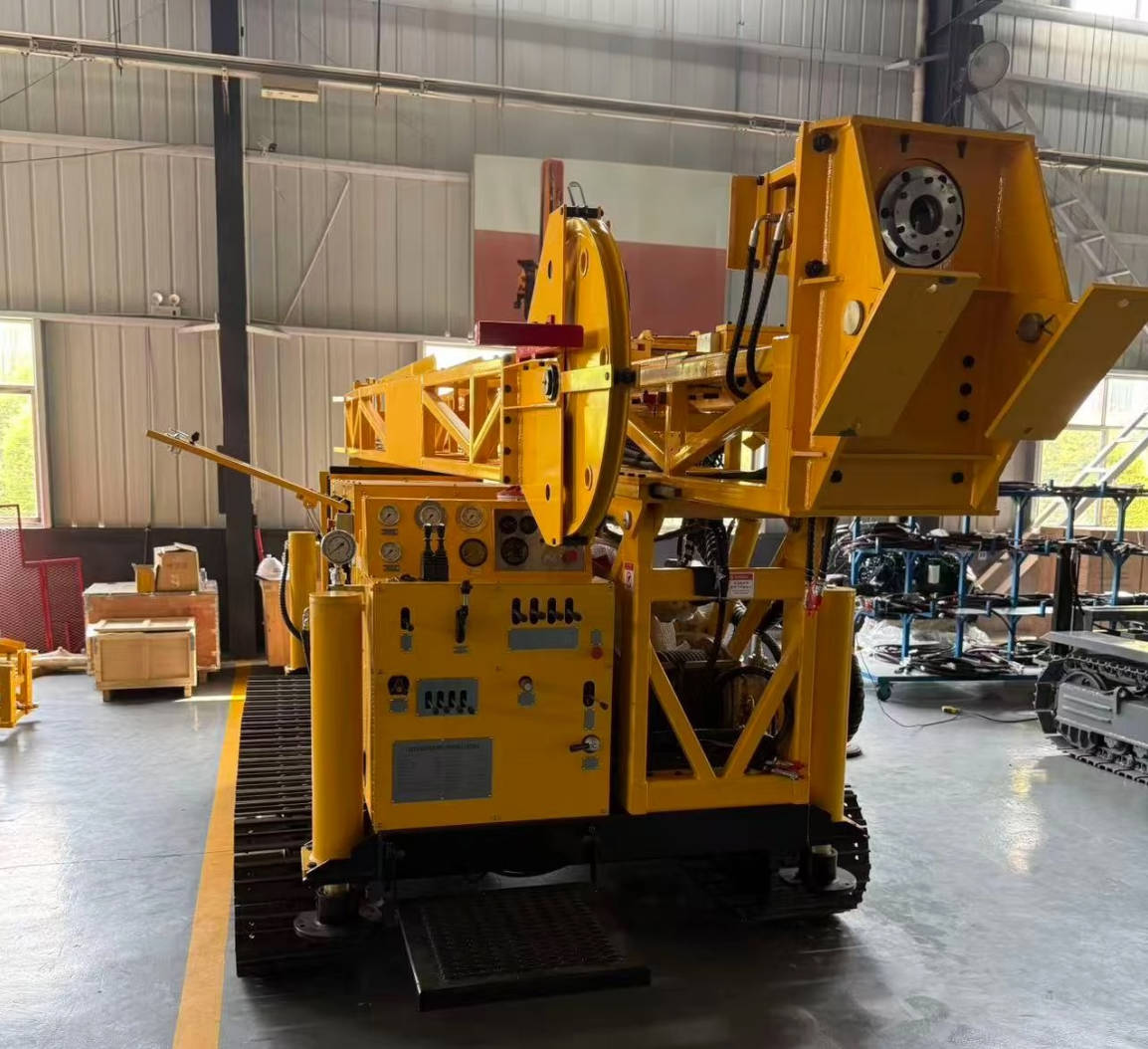
Underground grouting is a ground-improvement and water-control process. Contractors inject cementitious, chemical, or other engineered grout materials into rock fractures, soil voids, joints, or weak zones.
The purpose is usually to reduce permeability, strengthen fractured ground, control groundwater inflow, stabilize excavations, or prepare a tunnel face before excavation advances.
In practice, underground grouting can include:
- Permeation grouting to fill permeable soils or fractures without significantly disturbing the ground structure
- Compaction grouting to densify loose soil and fill voids
- Rock grouting to seal fractures around tunnels, shafts, dams, or underground openings
- Curtain grouting to create a lower-permeability barrier against water flow
- Consolidation grouting to improve rock mass strength around excavations
- Contact grouting to fill gaps between support structures and surrounding ground
Unlike core drilling, grouting is an intervention process. Its success depends on grout design, injection pressure, flow rate, stage spacing, packer sealing, geology, and real-time monitoring.
Surface core drilling is an investigation method used to recover cylindrical rock samples from beneath the ground surface. A diamond drill bit cuts an annular path through the rock, leaving an intact central sample called a core.
A surface core drill is commonly used in mineral exploration, geotechnical site investigation, hydrogeology, infrastructure planning, and deep geological research. It can provide direct evidence of lithology, mineralization, fracture frequency, rock quality, alteration, structural orientation, and groundwater-related conditions.
For an exploration team, recovered core is much more than a sample. It is physical geological evidence that can be logged, photographed, assayed, oriented, tested, and compared with geophysical data.
Modern full-hydraulic wireline diamond core drilling rigs are designed to improve efficiency during deep-hole drilling. The wireline system allows the inner tube containing the core to be retrieved without pulling the entire drill string from the borehole.
This reduces non-productive time and can protect both drilling productivity and sample continuity in demanding formations.
| Comparison Factor | Underground Grouting | Surface Core Drilling |
|---|---|---|
| Primary purpose | Improve, seal, stabilize, or control ground conditions | Recover rock core and define subsurface geology |
| Main output | Treated ground, reduced water inflow, improved stability | Physical core samples, geological logs, structural data |
| Typical work location | Tunnels, shafts, underground mines, basements, caverns | Surface drill pads, remote exploration sites, infrastructure sites |
| Key equipment | Grout mixer, agitator, pump, packers, hoses, injection rods, monitoring system | Full-hydraulic core drill rig, diamond bit, drill rods, core barrel, wireline overshot, mud pump |
| Main operating variable | Grout pressure, flow, mix ratio, refusal criteria, volume | Rotation speed, feed pressure, torque, fluid circulation, penetration rate |
| Data value | Confirms treatment response and ground behavior | Supports geological interpretation and engineering decisions |
| Common risk | Over-pressurization, uncontrolled grout travel, leakage, poor sealing | Core loss, borehole deviation, stuck rods, unstable ground, rod-handling hazards |
| Typical project stage | Construction, ground treatment, water control, remediation | Exploration, feasibility, design investigation, resource definition |
The comparison makes one point clear: these are not competing methods. They are often sequential parts of the same subsurface strategy.
A project may begin with surface diamond core drilling to identify faults, fractured zones, and water-bearing structures. Later, underground grouting may be used to reinforce or seal the specific zones identified during drilling.
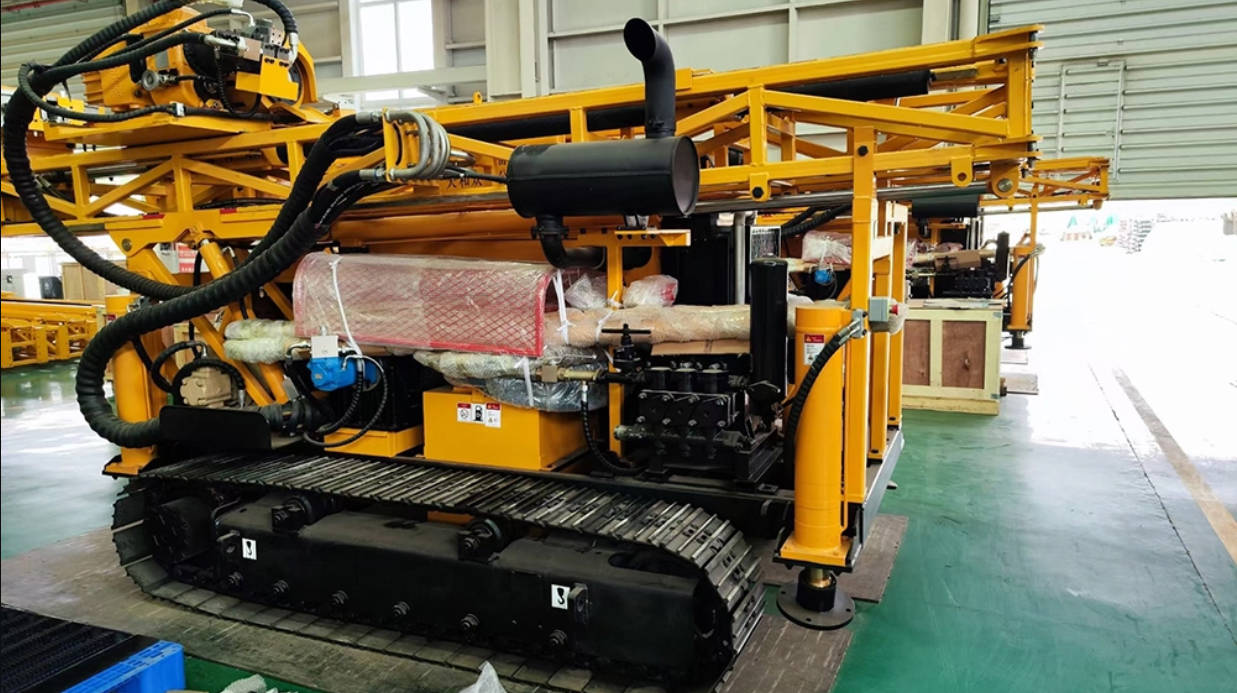
A reliable underground grouting system is a controlled injection plant rather than a single machine. Equipment must consistently mix, transport, inject, and monitor grout under variable site conditions.
A typical underground grouting setup includes:
- High-shear grout mixer for producing a uniform grout mixture
- Agitator tank for keeping cement particles suspended before pumping
- Positive-displacement grout pump for controlled injection
- Grout packers to isolate target zones within boreholes
- Injection pipes and high-pressure hoses to transfer grout safely
- Pressure gauges and flow meters to monitor injection behavior
- Data logging system to record pressure, flow, volume, and grout take
- Drilling equipment to create grout holes at planned angles and depths
The grout pump is especially important because it determines how precisely the contractor can control pressure and flow. In fractured rock, excessive injection pressure can widen fractures, create unintended grout paths, or affect nearby structures.
Underground conditions introduce access, ventilation, water, and space constraints. Equipment therefore needs to be compact, durable, and easy to position in confined headings.
A professional grouting package should provide:
- Stable pressure control during changing ground conditions
- Continuous mixing to prevent settlement and inconsistent grout quality
- Fast cleaning procedures between grout batches
- Durable components for abrasive cement-based materials
- Safe hose connections and pressure-relief measures
- Monitoring capability for quality assurance and documentation
Expert insight: The best grouting pump cannot compensate for an uncontrolled grout mix. Consistency in water-to-cement ratio, additives, mixing energy, and batching procedure is essential for predictable injection performance.
Surface core drilling equipment is designed around one mission: recover representative core safely and efficiently at the required depth, diameter, and orientation.
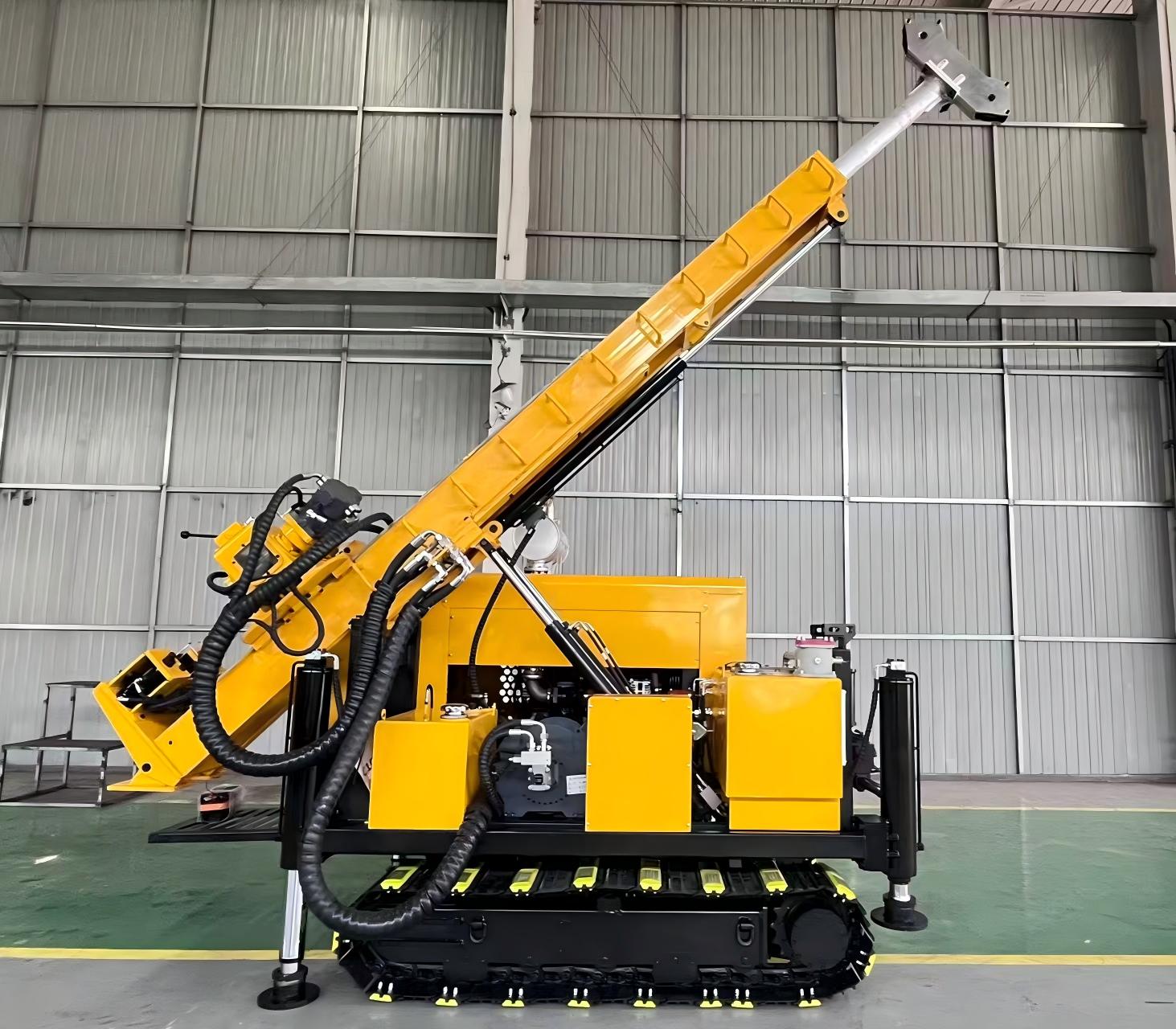
For mineral exploration and geotechnical work, a full-hydraulic wireline diamond core drilling rig offers the flexibility to operate across hard rock, fractured formations, remote terrain, and deep-hole programs.
A standard surface coring system may include:
- Full-hydraulic diamond core drill rig
- Mast and feed frame
- Rotation head or top-drive system
- Diamond drill bits
- Drill rods and casing
- Wireline core barrel and inner tube
- Wireline overshot and winch
- Mud pump and fluid-management system
- Rod handling tools or automated rod-handling system
- Core racks, core boxes, and sample-management tools
- Survey instruments for borehole deviation and orientation
The rig itself must balance torque, feed force, rotation speed, pullback capacity, and transportability. A rig that is oversized may increase mobilization cost and drill-pad requirements. A rig that is undersized may struggle with depth, casing demands, difficult ground, or large-diameter coring.
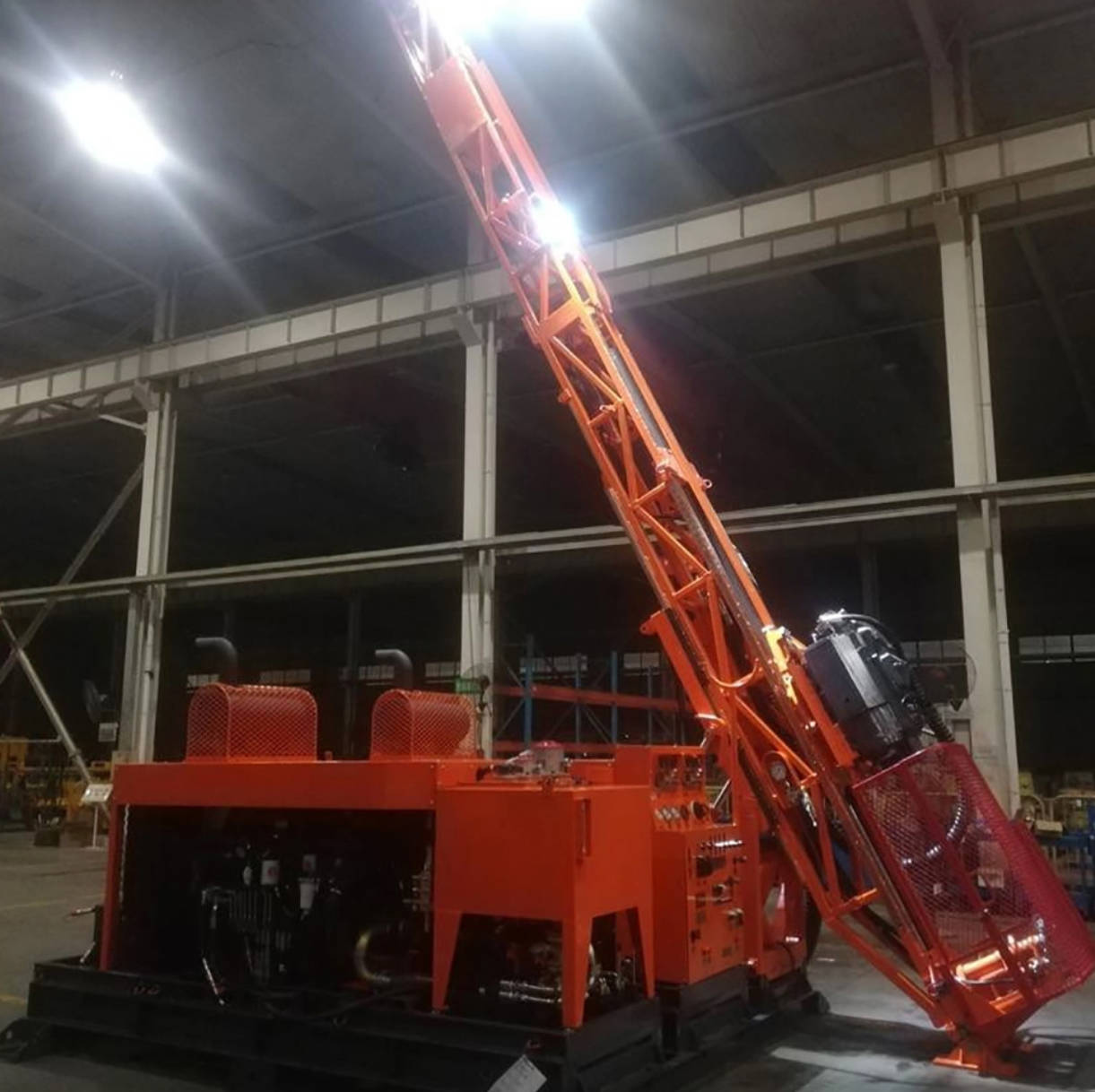
A full-hydraulic system gives operators fine control over drilling parameters. That control becomes especially valuable in broken, hard, abrasive, or variable rock.
Wireline coring also provides a major operational advantage. Instead of withdrawing the entire rod string to recover each core run, the crew retrieves only the inner tube through the rods.
The result can be:
- Less rod handling
- Faster core recovery cycles
- Lower exposure to manual handling risks
- Better drilling efficiency in deeper holes
- Reduced wear associated with repeated rod trips
- More consistent sample-recovery workflows
For companies planning deep mineral exploration or complex geotechnical programs, a high-quality CORE SURFACE DRILL should be evaluated as part of a complete drilling system—not as an isolated rig specification.
The biggest technical difference between underground grouting and surface core drilling is the direction of value creation.
Grouting changes the ground. Core drilling observes the ground.
During grouting, the crew injects material and monitors the response. Rising pressure, declining flow, grout take, and refusal behavior can indicate whether fractures or voids are being filled.
During surface core drilling, the crew manages mechanical drilling parameters to protect the borehole and recover usable core. Penetration rate, torque, water return, drilling-fluid condition, core recovery, and borehole deviation all provide useful operational feedback.
| Operational Question | Underground Grouting | Surface Core Drilling |
|---|---|---|
| What is the crew trying to achieve? | Controlled ground treatment | Reliable geological information |
| What indicates progress? | Planned grout volume and pressure response | Core recovery, target depth, sample quality |
| What may indicate a problem? | Sudden pressure loss, excessive grout take, unexpected ground heave | Poor recovery, lost circulation, deviation, rod torque increase |
| What is the end-point? | Design criteria, refusal criteria, or verified treatment zone | Target depth reached and core logged/recovered |
Selecting between grouting equipment and a surface core drilling rig should begin with the project objective—not the equipment catalogue.
Ask one practical question: do you need to understand the ground, or do you need to improve it?
Choose surface core drilling when you need to:
- Define orebody geometry or geological structures
- Evaluate rock mass quality
- Obtain samples for assay or laboratory testing
- Investigate foundation conditions
- Confirm fault zones, fractures, or groundwater pathways
- Build a geological model before mine, tunnel, or infrastructure design
Choose underground grouting when you need to:
- Reduce groundwater inflow
- Stabilize fractured rock around an excavation
- Seal voids, joints, or permeable zones
- Improve ground before tunneling or shaft sinking
- Limit settlement around sensitive structures
- Reinforce ground after excavation-related instability
For a surface core drilling project, assess drill-pad size, road access, elevation, ground slope, water supply, hole depth, expected casing requirement, rod size, and planned core diameter.
For underground grouting, assess tunnel dimensions, ventilation, power supply, water availability, injection-hole pattern, expected pressures, grout type, and cleaning logistics.
Practical rule: Do not select a drill rig solely based on advertised depth capacity. Real achievable depth depends on rod diameter, formation hardness, borehole angle, hole condition, drilling fluid performance, tooling selection, and operator practice.
The drilling rig or grout pump is only one part of the operation.
For surface core drilling, project performance also depends on bit selection, core barrels, rods, drilling fluids, casing strategy, wireline tools, crew competence, and spare-parts availability.
For grouting, performance depends on grout formulation, mixer capacity, pump characteristics, packer selection, injection records, hole spacing, and verification methods.
Both operations involve high-energy equipment, pressurized systems, moving rods, water, and difficult ground conditions. A strong safety culture is therefore part of technical quality.
For surface core drilling, key controls include:
- Pre-start inspections of hydraulic, lifting, guarding, and rod-handling systems
- Clear exclusion zones around rotating equipment and suspended rods
- Safe drill-pad design with stable access and drainage
- Controlled rod handling to reduce pinch-point and crush risks
- Routine inspection of drill rods, hoists, wirelines, and break-out tools
- Accurate core boxing, labeling, depth marking, and photography
For underground grouting, key controls include:
- Pressure-rated hoses, fittings, and packers
- Controlled pressure limits and emergency shut-off procedures
- Safe chemical and cement handling
- Reliable ventilation in confined underground spaces
- Continuous monitoring of pressure, flow, and grout volume
- Defined response procedures for leakage or unexpected grout migration
In many complex projects, the strongest strategy combines both methods.
A typical workflow may look like this:
1. Conduct surface core drilling to build a geological and hydrogeological understanding of the site.
2. Identify fractured zones, water-bearing structures, weak rock, and potential excavation risks.
3. Use borehole and core data to design tunnel alignment, support requirements, or grout-hole patterns.
4. Perform underground grouting in targeted zones before or during excavation.
5. Verify treatment performance through pressure records, probe holes, water-inflow measurements, or follow-up drilling.
This workflow reduces the risk of treating the wrong ground conditions. It also helps teams prioritize grouting resources where they can produce the greatest engineering value.
The lowest purchase price does not always produce the lowest project cost.
A poorly matched surface core drilling rig can create slow penetration, excessive downtime, weak core recovery, high consumable use, and repeated hole problems. In exploration, poor-quality core may also lead to weaker geological interpretation and expensive re-drilling.
Similarly, unreliable grouting equipment can cause inconsistent mixes, injection interruptions, pressure-control problems, and difficult quality verification.
For decision-makers, the relevant question is not simply "What does the machine cost?" It is:
"How reliably can this equipment deliver the required result under our actual ground conditions?"
CORTECH develops full-hydraulic wireline diamond drilling solutions for clients that need dependable surface coring performance. A properly configured CORE SURFACE DRILL can help exploration and geotechnical teams improve drilling control, reduce unnecessary handling time, and recover the core information required for confident project decisions.
Underground grouting and surface core drilling are complementary technologies with different roles. Use grouting to control ground and water. Use surface core drilling to understand geology, recover samples, and reduce uncertainty before major engineering decisions.
If your project requires reliable rock core recovery, deep-hole capability, and a full-hydraulic wireline drilling solution, contact CORTECH to discuss a CORE SURFACE DRILL configuration matched to your target depth, terrain, core size, and geological conditions.
No. Underground grouting injects material to improve or seal ground conditions. Core drilling retrieves intact rock samples for geological, geotechnical, or mineral exploration analysis.
A surface drilling rig can create holes that may later support grouting programs, depending on hole diameter, angle, access, and design requirements. However, core drilling equipment and grouting equipment have different primary functions and should be selected accordingly.
A wireline diamond core drilling rig uses an inner tube to collect core. The inner tube can be retrieved through the drill rods by a wireline overshot, reducing the need to pull the complete rod string after each core run.
High core recovery improves confidence in geological interpretation. It helps engineers and geologists identify structures, mineral zones, fractures, rock quality, and alteration without major gaps in the physical record.
A typical system includes a grout mixer, agitator, pump, hoses, packers, injection rods, pressure gauges, flow meters, and monitoring tools. The exact package depends on grout type, target ground, injection pressure, and project constraints.
Evaluate target depth, required core diameter, expected geology, terrain, drill-pad access, casing needs, mobility requirements, hydraulic capacity, rod-handling method, and local service support. Always select the complete drilling system—not only the rig.
Yes. Core drilling can identify fractures, weak zones, fault structures, and water-bearing formations. This information helps engineers place grout holes more accurately and select more appropriate grout materials and injection parameters.
1. Federal Highway Administration. “Ground Modification Methods Reference Manual – Volume II.” Detailed discussion of grouting equipment, materials, and construction methods. [View source] [fhwa.dot]
2. U.S. Army Corps of Engineers. “Grouting Technology, EM 1110-2-3506.” Guidance covering grouting procedures, water supply, mixers, and rock permeation grouting requirements. [View source] [publications.usace.army]
3. Federal Highway Administration. “Grouting in Soils: Design and Operations Manual.” Guidance on grout selection, injection patterns, construction control, and equipment requirements. [View source] [rosap.ntl.bts]
4. Boart Longyear. “Surface Exploration Drilling Products.” Overview of surface diamond core drilling solutions for shallow/deep holes and multiple core diameters. [View source] [boartlongyear]
5. Epiroc. “Core Drilling Rigs: Underground & Surface Exploration.” Overview of exploration core drilling rigs for underground and surface applications. [View source] [epiroc]
6. WorkSafe Victoria. “Drilling Hazards: Handling Drill Rods.” Safety recommendations for drill-pad layout, rod handling, lifting, inspections, and risk control. [View source] [worksafe.vic.gov]
7. Cortech Drilling. “Reaching Greater Rock Coring Depths with Modern Hydraulic Core Rigs: A Field Engineer’s Perspective.” Discussion of hydraulic drilling control, wireline coring, core orientation, and deep exploration drilling. [View source] [cortechdrilling]


