
Views: 215 Author: CORTECH Publish Time: 2026-10-31 Origin: Site


Content Menu
● What Are the Main Downsides of Diamond Drilling?
● 1. Diamond Drilling Can Have Higher Total Costs
>> The Rig Purchase Is Only the Starting Point
>> Low Penetration Rates Increase Time-Related Expenses
● 2. Water Requirements Create Logistical and Environmental Challenges
● 3. Diamond Drilling Speed Can Be Unpredictable
>> Hard Rock and Broken Rock Create Different Problems
● 4. Core Recovery Is Not Guaranteed
>> Recovery Percentage Does Not Tell the Whole Story
>> Recovery Improvements May Reduce Production
● 5. Diamond Bits Can Wear, Polish, or Perform Poorly
● 6. Hole Stability and Deviation Can Affect Results
● 7. Skilled Operators and Maintenance Remain Essential
>> Wireline Systems Add Efficiency—and Components
● 8. Safety and Environmental Risks Cannot Be Designed Away
● How to Evaluate Diamond Drilling Economics More Accurately
>> Use a Usable-Core Cost Calculation
>> Track the Causes of Lost Production
● When Is Another Drilling Method More Appropriate?
● Discuss Your Surface Core Drilling Requirements With CORTECH
>> 1. What Is the Biggest Downside of Diamond Drilling?
>> 2. Is Diamond Drilling Always Slower Than Other Methods?
>> 3. Can Wireline Drilling Eliminate Downtime?
>> 4. Can Diamond Drilling Recover Perfect Core in Fractured Rock?
>> 5. How Can Buyers Reduce Diamond Drilling Costs?
The downsides of diamond drilling include higher operating costs, demanding water management, slower progress in difficult ground, expensive tooling, and reliance on skilled operators. For mineral exploration teams, the central question is not whether diamond drilling can recover valuable rock core. It is whether that information justifies the cost and complexity of obtaining it.
From a manufacturer's perspective, the most useful discussion starts with limitations rather than promises. A capable drill rig matters, but geology, tooling, circulation, maintenance, and crew decisions determine how effectively the equipment performs.
This article focuses on surface mineral exploration and geotechnical diamond core drilling, particularly fully hydraulic wireline systems relevant to CORTECH—not diamond drilling for holes in concrete buildings.

Diamond core drilling uses a diamond cutting bit to cut an annular path through rock, leaving a cylindrical core inside the barrel. Its value lies in recovering material that geologists can examine, log, and test.
However, that information comes with trade-offs.
| Downside | Operational consequence | Practical response |
|---|---|---|
| Higher equipment and tooling costs | More capital and working cash required | Compare complete drilling packages |
| Water and fluid requirements | Supply, containment, and disposal challenges | Design circulation before mobilization |
| Variable penetration rates | Uncertain completion schedules | Plan around expected ground conditions |
| Core loss in difficult formations | Missing or damaged geological evidence | Adapt barrels, run lengths, and parameters |
| Bit wear and polishing | Higher consumable costs and downtime | Match tooling to geology |
| Specialized maintenance and skills | Greater dependence on crew competence | Verify training, service, and spare parts |
| Safety and environmental exposure | Additional controls and supervision | Assess risks across the entire operation |
The right comparison is therefore cost per usable core meter, not simply the lowest quoted drilling rate.
A surface core drill requires more than a rotation head and a mast. Depending on the project, the operating package may include:
- Drill rods, casing, core barrels, and overshots.
- Diamond bits and reaming shells.
- Pumps, hoses, tanks, and fluid-treatment equipment.
- Core trays, handling tools, and transport.
- Fuel, service parts, and trained personnel.
Buyers can underestimate costs when they compare bare-machine prices against complete operating packages.
For a CORTECH equipment inquiry, the specification should therefore describe the intended drilling system, not just the desired hole depth.
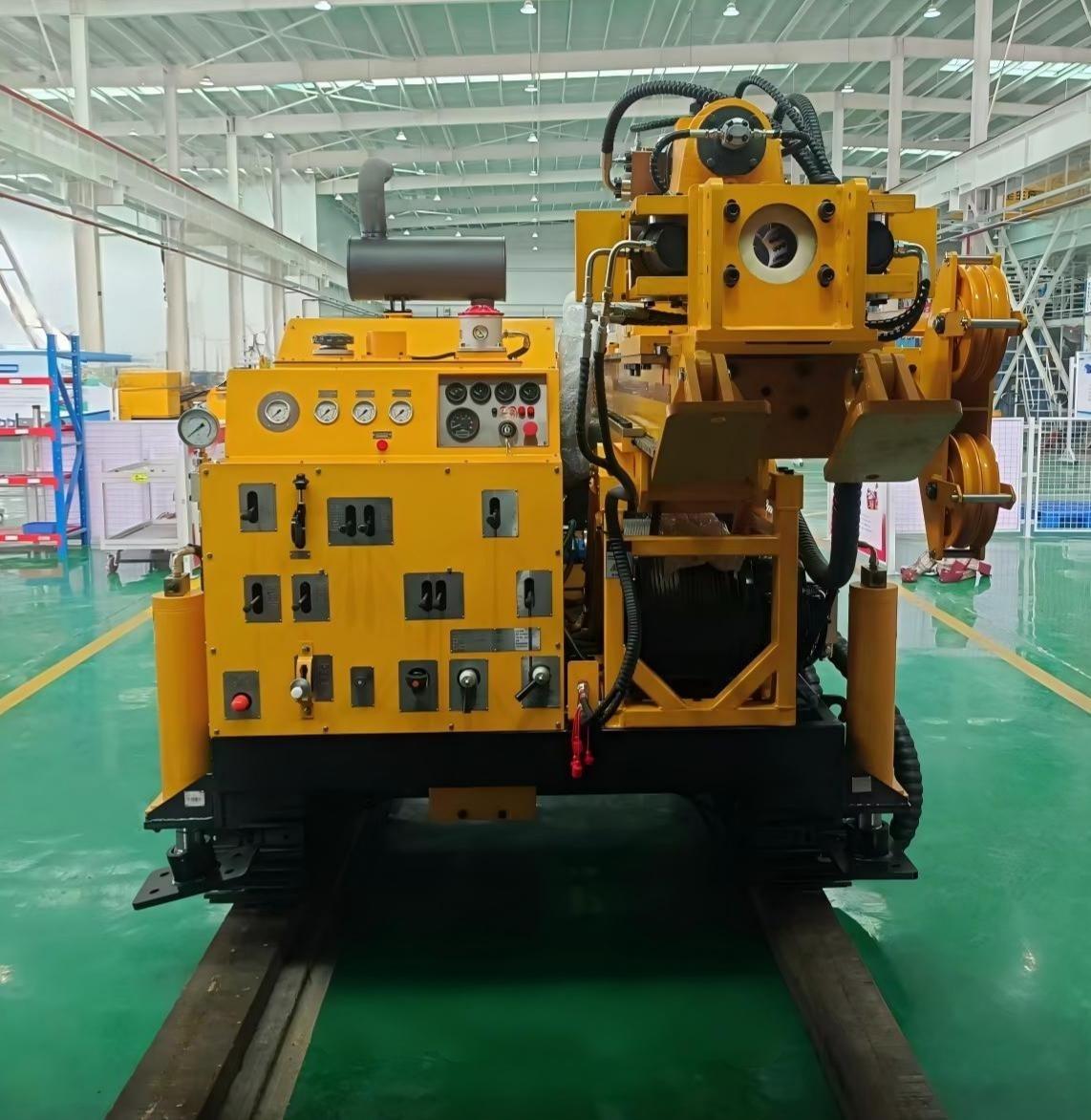
Crew wages, fuel consumption, equipment availability, and site support continue even when drilling progress slows.
Consequently, a cheaper bit is not necessarily the cheaper choice. If it produces fewer acceptable meters or requires frequent replacement, its apparent saving may disappear.
Likewise, a higher hourly production rate does not automatically mean better economics if the recovered core is unsuitable for the investigation.
Water or another suitable drilling fluid typically cools the bit and transports cuttings away from the cutting face. Maintaining effective circulation is therefore central to conventional diamond coring.
At remote sites, the challenge extends beyond supplying enough water. Teams must also manage:
- Storage and transfer.
- Pumping distance and elevation.
- Leaking connections.
- Lost circulation.
- Collection and treatment of returns.
- Site-specific environmental obligations.
Fractures or permeable zones can allow fluid to escape into the formation. When returns deteriorate, the crew may need to investigate the cause and change the drilling approach.
Fluid selection also affects the investigation itself. A fluid program intended to stabilize a hole must remain compatible with sampling, groundwater assessment, or other planned testing.
The practical lesson is straightforward: water management belongs in the project design, not in the list of problems to solve after arrival.
One disadvantage of diamond drilling is that progress varies substantially with geological conditions and operating parameters.
Rock hardness matters, but it is not the only influence. Abrasiveness, fractures, weathering, hole depth, bit condition, and cuttings removal also affect performance.
Competent hard rock may drill slowly but produce coherent core. Broken ground can create different difficulties: unstable hole walls, blocked barrels, circulation losses, or fragmented samples.
That distinction matters when evaluating production estimates. A single "meters per shift" figure cannot describe every formation.
Ask whether an estimate includes:
- Actual cutting time.
- Core retrieval.
- Rod and casing handling.
- Bit replacement.
- Maintenance.
- Delays caused by ground conditions.
Wireline retrieval reduces the need to pull the entire rod string after each core run. It does not eliminate these other sources of lost time.
Diamond drilling can recover valuable physical samples, but it cannot guarantee complete, undisturbed recovery in every formation.
Weathered, weak, fractured, or highly broken rock may deteriorate during cutting and retrieval. Excessively aggressive drilling can also damage samples.
A recovered interval can contain substantial material while still providing limited structural information if the core is heavily fragmented.
Geologists should distinguish between how much material was recovered and whether it preserves the features needed for interpretation or testing.
Depending on the investigation, useful observations may include:
- Continuity of recovered core.
- Condition of fractures.
- Preservation of weak material.
- Evidence of drilling-induced damage.
- Suitability for laboratory testing.
Shorter core runs, more protective barrel arrangements, or revised operating parameters may improve recovery in difficult ground.
However, these measures can require more retrieval cycles or slower advancement.
This is an important commercial trade-off: protecting sample quality may deliberately reduce the number of meters drilled during a shift.
Diamond tooling is specialized, but it is not universally effective across all rock types.
For impregnated bits, the relationship between the diamond-bearing matrix and the formation is particularly important. The matrix must wear appropriately to expose cutting diamonds.
When operating conditions or bit selection prevent effective exposure of fresh diamonds, the cutting face can polish and penetration can decline.
The correct response depends on the bit design and drilling conditions. Automatically increasing rotation speed or feed pressure can make diagnosis harder rather than solve the problem.
A disciplined assessment considers:
1. Formation changes.
2. Bit selection and condition.
3. Rotation speed.
4. Feed and penetration rate.
5. Circulation performance.
6. Manufacturer operating guidance.
Published parameter ranges should not be treated as universal settings for every bit, diameter, and formation.

A hole that reaches its planned depth has not necessarily achieved its geological objective.
Deviation may change where the borehole intersects a target. Instability may restrict access, damage equipment, or prevent completion.
These problems can require additional casing, modified tooling, stabilization measures, surveys, or revised drilling parameters.
Their consequences extend beyond drilling time. An inaccurately located intersection can complicate interpretation, while an abandoned hole may leave an important target unresolved.
Where intersection position matters, borehole surveying should be considered part of the investigation rather than an optional finishing task.
Fully hydraulic controls can support controlled feed and rotation. They do not remove the need for experienced judgment.
Operators must recognize changes in torque, pressure, penetration, vibration, and fluid returns. They must then distinguish a developing mechanical problem from changing ground conditions.
Wireline systems retrieve the inner tube without removing the entire rod string after each run. This can improve productivity, particularly as retrieval distance increases.
However, overshots, latching components, inner tubes, cables, and associated equipment still require inspection and maintenance.
Hydraulic systems also depend on appropriate filtration, fluid condition, hose integrity, and service practices.
When evaluating a manufacturer, ask about documentation, parts identification, technical support, and maintenance access—not only drilling capacity.
Diamond drilling involves rotating equipment, heavy rods, suspended components, hydraulic pressure, and manual handling.
Silica exposure also requires attention where drilling or associated activities generate respirable dust from silica-containing rock. Wet methods can reduce dust, but they should not be treated as proof that every exposure has been controlled.
A site-specific risk assessment should address:
- Contact with rotating equipment.
- Rod and lifting operations.
- Stored hydraulic energy.
- Noise and dust exposure.
- Slips around wet working areas.
- Fuel, fluid, and drilling-return management.
Applicable requirements depend on the jurisdiction and whether the work falls under mining, construction, or another regulatory framework.
An effective project metric is:
Cost per usable core meter = total drilling campaign cost ÷ meters of core accepted for the intended investigation.
Consider this illustrative example, not a market quotation:
| Measure | Campaign A | Campaign B |
|---|---|---|
| Total campaign cost | $100,000 | $110,000 |
| Total drilled length | 1,000 m | 1,000 m |
| Accepted usable core | 800 m | 950 m |
| Cost per usable core meter | $125.00 | $115.79 |
Campaign B costs more overall but delivers usable core at a lower unit cost.
Acceptance criteria must be defined before applying this comparison. "Usable" could mean material suitable for geological logging, assay preparation, structural interpretation, or a specified test.
This framework is a decision aid, not a standardized industry reporting requirement.
Record delays separately rather than grouping everything as downtime.
Useful categories include:
- Core retrieval and handling.
- Tool changes.
- Circulation problems.
- Hole instability.
- Mechanical maintenance.
- Waiting for water, transport, or supplies.
This separates problems a better rig might address from problems requiring different logistics, tooling, or drilling procedures.
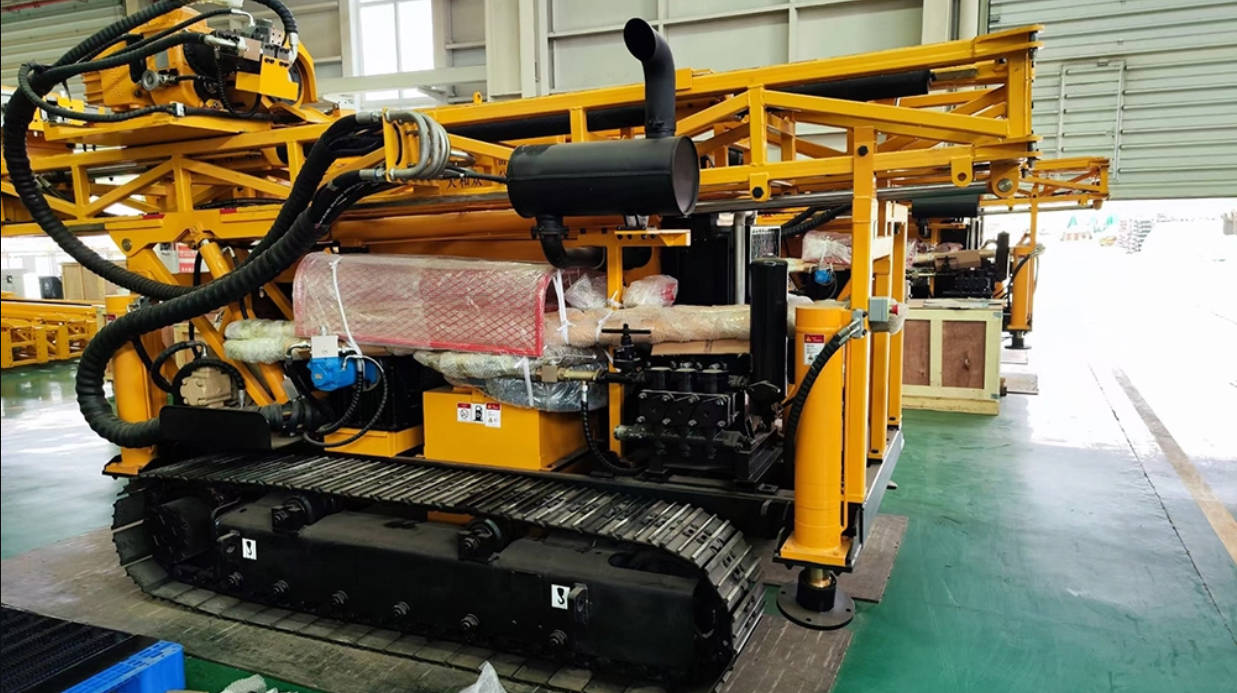
Diamond drilling is not automatically the best choice for every exploration stage.
When intact core is unnecessary, non-core drilling may offer a quicker, less expensive way to advance an investigation. Conversely, projects needing preserved geological relationships may justify the additional effort of coring.
The decision should begin with the information required:
| Investigation priority | Selection implication |
|---|---|
| Intact rock for examination or testing | Core drilling deserves strong consideration |
| Rapid advancement without intact samples | Evaluate appropriate non-core methods |
| Detailed structural interpretation | Consider core quality and orientation requirements |
| Difficult groundwater or stability conditions | Assess circulation and support requirements first |
Avoid comparing methods solely by their headline price per meter. Different methods may deliver different kinds of evidence.
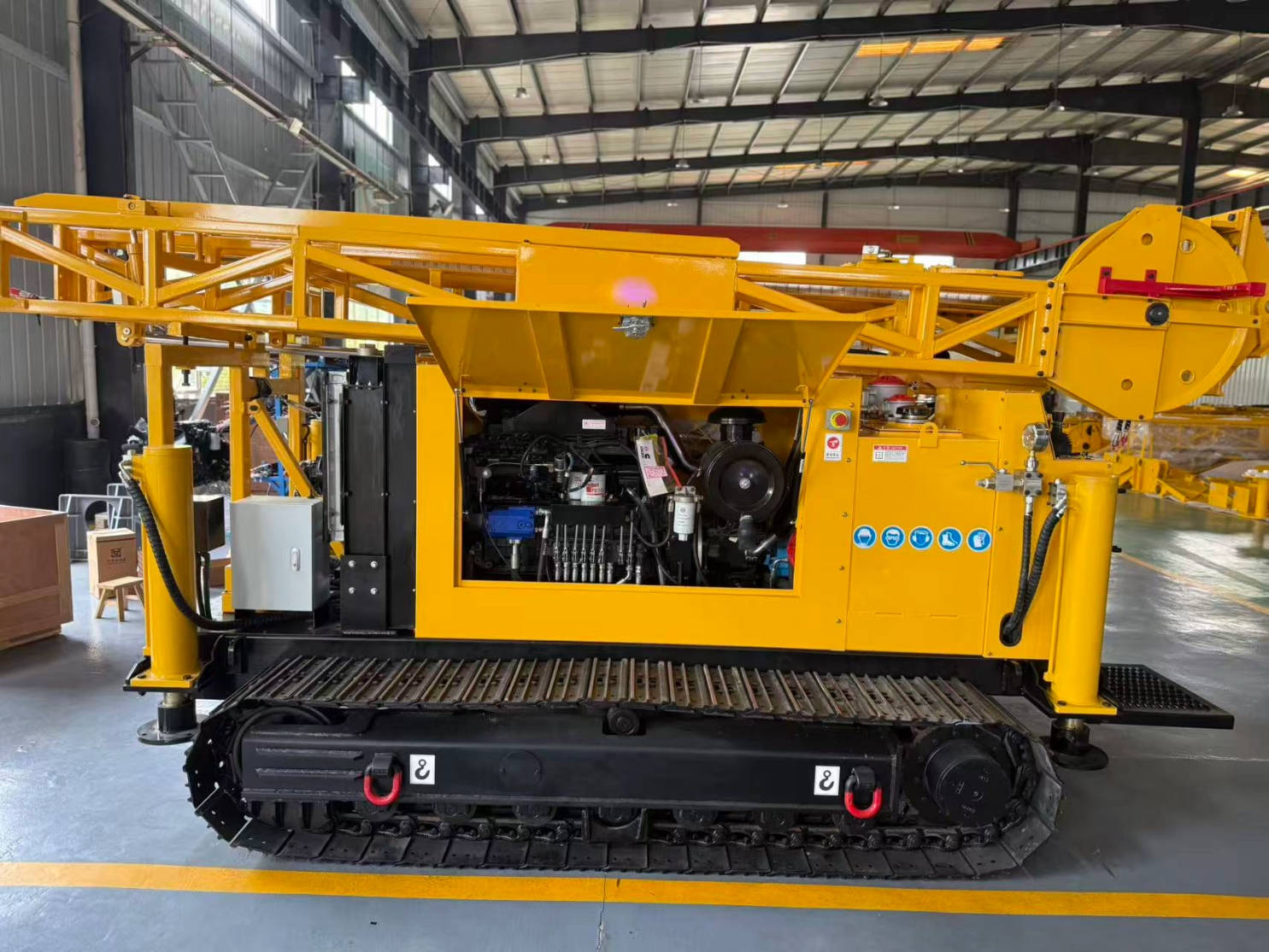
The downsides of diamond drilling become easier to manage when equipment selection begins with a realistic drilling plan.
Send CORTECH your target depth, hole inclination, core diameter, expected formations, water availability, access constraints, and recovery requirements. Request a fully hydraulic wireline surface drilling proposal that identifies the proposed configuration, supporting equipment, tooling assumptions, and service requirements.
This creates a more useful purchasing discussion than a rig price alone.
The largest disadvantage is often total project cost. Specialized equipment, tooling, personnel, water management, and variable production all contribute. The most important limitation depends on the site and required sample quality.
No. Performance depends on geology, depth, equipment, and the comparison method. However, recovering core introduces cutting, retrieval, and handling requirements that may be unnecessary when only cuttings or hole advancement are needed.
No. Wireline retrieval reduces full-string removal between core runs, but maintenance, bit changes, difficult ground, circulation problems, and sample handling still take time.
Not reliably. Protective barrels, shorter runs, and appropriate parameters can help, but naturally broken or weak material may remain difficult to recover without disturbance.
Define the required information first. Then match the rig, tooling, circulation system, and maintenance support to the project. Track usable recovery and delay causes instead of pursuing maximum penetration alone.
1. Bureau of Indian Standards. IS 6926:1996—Diamond Core Drilling: Code of Practice. Technical guidance covering drilling practices, core recovery, and operational considerations. [law.resource]
2. Federal Highway Administration. Drilling and Sampling of Soil and Rock. Discusses non-core drilling, rock coring, and conventional versus wireline retrieval; hosted by PDH Online. [pdhonline]
3. Boart Longyear. Impregnated Bit Overview / Bits Catalog. Technical guidance on bit selection, drilling parameters, polishing, and difficult ground. Its recommendations are product-specific rather than universal operating limits. [boartlongyear]
4. Occupational Safety and Health Administration. Silica, Crystalline—Overview. Explains respirable crystalline silica generation, exposure pathways, and associated health risks. [osha]
5. Occupational Safety and Health Administration. 29 CFR 1926.1153—Respirable Crystalline Silica. Construction-specific requirements and task-based exposure controls; applicability must be checked for the operation concerned. [osha]
6. CORTECH. Diamond Core Drilling vs. Air Core Drilling: Which Method Is Right for Your Exploration Project? Manufacturer perspective on method selection, circulation requirements, costs, and wireline operation. [cortechdrilling]


