
Views: 240 Author: CORTECH Publish Time: 2026-08-05 Origin: Site


Content Menu
● Environmental Soil Sampling Explained
>> What environmental sampling tries to protect
● Traditional Core Recovery Explained
>> What core recovery is trying to preserve
● Rig Sensitivity: The Hidden Variable
>> Why sensitivity changes sample quality
>> Why full hydraulic systems matter
● How Rig Sensitivity Affects Environmental Soil Sampling
>> 1. It protects chemical integrity
>> 2. It reduces cross-layer mixing
>> 3. It improves defensibility
>> 4. It supports cleaner field workflow
● How Rig Sensitivity Affects Traditional Core Recovery
>> 1. It improves core continuity
>> 2. It lowers fracture damage
>> 3. It supports better recovery in variable formations
>> 4. It increases confidence in geological interpretation
● A Practical Selection Framework
>> Use environmental soil sampling when you need
>> Use traditional core recovery when you need
>> Ask these questions before drilling
● Expert Insight From the Field
● New Data Point: What Recent Field Performance Trends Show
● Best Practices to Improve Results
>> Operational habits that help
● FAQ
>> 1. What is the main difference between environmental soil sampling and traditional core recovery?
>> 2. Why does rig sensitivity matter so much?
>> 3. Is a higher recovery rate always better?
>> 4. Which method is better for contamination studies?
>> 5. Which method is better for geology and mineral exploration?
>> 6. Can one rig handle both tasks?
Environmental soil sampling and traditional core recovery are often treated as two versions of the same field task. In practice, they serve very different goals, demand different levels of sample integrity, and respond very differently to rig sensitivity, vibration, feed control, and operator technique.
For engineers, geologists, and environmental consultants, the real question is not only what you are sampling, but how gently and consistently the rig can preserve the sample from the first cut to final retrieval. That is where rig sensitivity becomes a decisive factor.
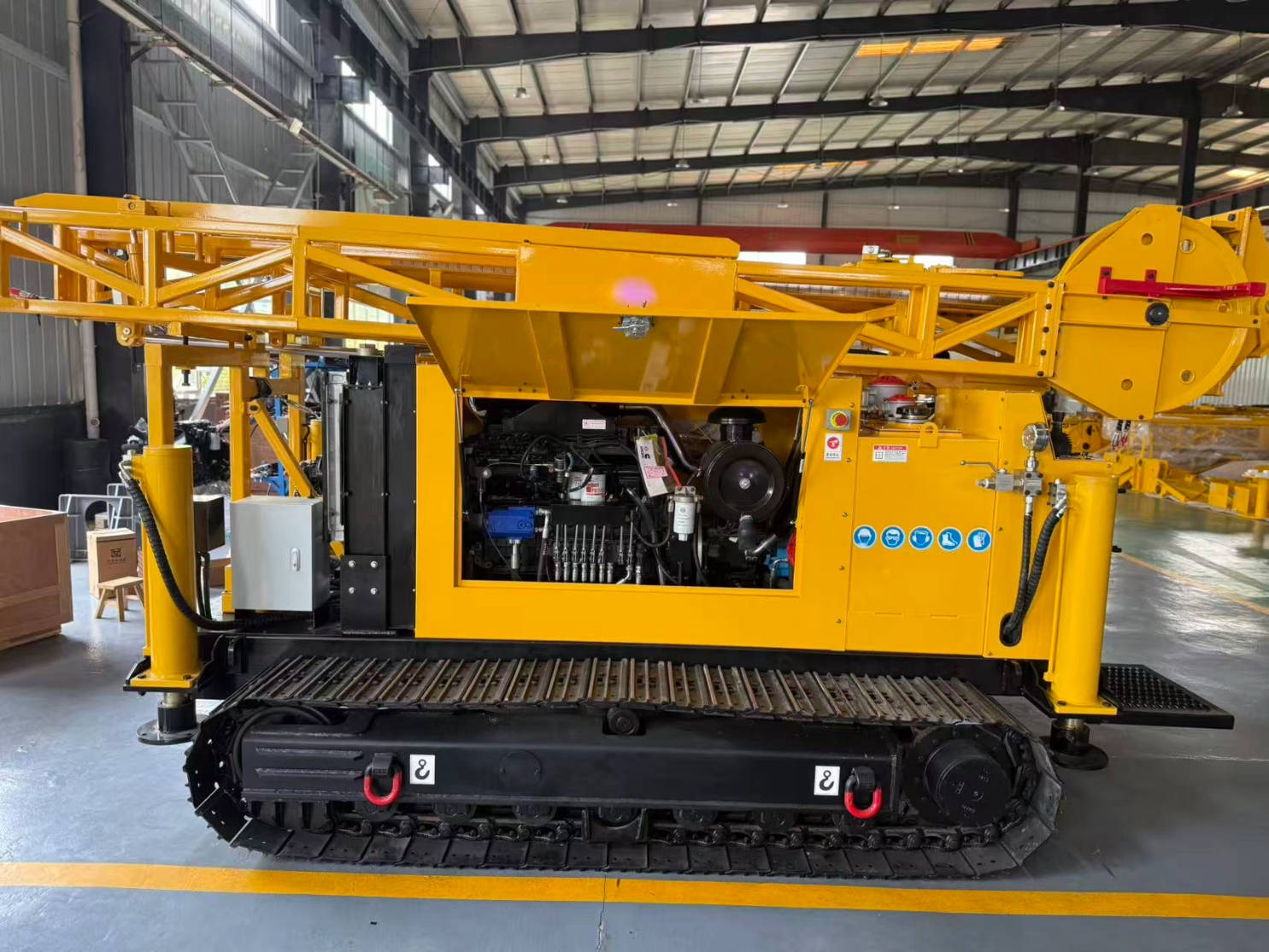
Environmental soil sampling is usually performed to detect contamination, define pollutant spread, or support remediation decisions. Traditional core recovery, by contrast, is often used for geological logging, stratigraphy, geotechnical evaluation, and mineral exploration.
Although both involve recovering subsurface material, their success criteria are different.
- Environmental soil sampling prioritizes representative chemistry and minimal disturbance.
- Traditional core recovery prioritizes structural continuity and recovery percentage.
- One bad drill response can invalidate both, but in environmental work the cost of disturbance can be especially high.
A sensitive rig can help preserve pore structure, reduce sample smear, and lower the risk of volatilization loss. In core recovery, the same sensitivity helps maintain intact core geometry and better rock description.
Environmental soil sampling focuses on collecting soil that accurately reflects in-situ conditions. The objective is to preserve the physical and chemical state of the material as much as possible before laboratory analysis.
- Contaminant concentration
- Moisture content
- Volatile compounds
- Layer boundaries
- Undisturbed texture
This is why sampling methods are often chosen based on contaminant type, depth, soil condition, and target analysis. For example, VOC sampling demands extra care because heat, vibration, and exposure can alter the result.
Environmental sampling usually requires:
1. Fast retrieval to reduce sample alteration.
2. Low-disturbance drilling to limit mixing.
3. Consistent depth control for defensible data.
4. Clean handling procedures to avoid cross-contamination.
If the rig is too aggressive, the sample may be compressed, smeared, heated, or mixed with material from adjacent layers. That can distort lab results and lead to poor decisions during site assessment.
Traditional core recovery is built around recovering a continuous or near-continuous subsurface core for logging and analysis. It is widely used in mineral exploration, geotechnical engineering, and construction investigations.
- Core continuity
- Fracture orientation
- Lithology changes
- Core block structure
- Recovery rate across depth intervals
In this context, partial recovery is not always a failure, but low fidelity is. If the core is fragmented, rotated, washed out, or mechanically disturbed, the log loses value even if the recovery percentage looks acceptable.
Traditional coring often tolerates more mechanical loading than environmental sampling, but it still depends heavily on stable torque, controlled feed, and reduced vibration.
Rig sensitivity means how precisely the drilling system responds to changing formation conditions, operator inputs, and load fluctuations. It includes control over rotation speed, feed force, torque delivery, and reaction to resistance changes.
A highly sensitive rig helps to:
- Maintain stable drilling pressure.
- Reduce sudden torque spikes.
- Prevent over-penetration.
- Lower vibration transfer into the sample.
- Improve operator control in soft, mixed, fractured, or variable ground.
This is especially important when working across alternating layers. In such conditions, a rigid or poorly tuned rig may suddenly overreact to formation changes. The result can be sample distortion, borehole instability, or core breakage.
From a field-performance standpoint, full hydraulic control is often superior to older mechanical systems because it supports smoother power delivery and finer adjustment. For soil sampling and diamond coring alike, that means the operator can make smaller corrections in real time, instead of forcing the formation to adapt to the rig.
That difference becomes critical in:
- Soft soils with contamination concerns.
- Mixed strata with clay, silt, sand, and gravel transitions.
- Deep holes where cumulative instability grows.
- Hard rock where torque management determines recovery quality.

| Factor | Environmental Soil Sampling | Traditional Core Recovery |
|---|---|---|
| Main goal | Preserve chemical and physical representativeness | Recover intact geological or geotechnical core |
| Sample sensitivity | Very high, especially for VOCs and contaminants | High, especially for structure and fracture integrity |
| Tolerance for vibration | Low | Moderate to low |
| Best rig behavior | Smooth feed, low disturbance, precise depth control | Stable torque, consistent RPM, strong recovery control |
| Main risk | Smearing, volatilization, cross-contamination | Core breakage, washout, fragmentation |
| Data consequence of poor control | Wrong contamination profile or false negatives | Misleading lithology or reduced core fidelity |
This comparison shows a simple truth: the more sensitive the data requirement, the more important rig sensitivity becomes.
Environmental projects often depend on small differences in analytical results. That is why drilling disturbance matters so much.
Excessive vibration and heat can accelerate the loss of volatile compounds. If the sample is not recovered gently, analytes may be altered before the lab even receives the material.
A responsive rig can help maintain sharper depth separation. This is important when contamination is localized, because even slight mixing can flatten the real concentration profile.
Environmental data often supports regulatory reporting, remediation design, or legal review. A stable, well-controlled sampling process strengthens the credibility of the results.
Better rig control can reduce rework, repeat sampling, and unnecessary hole abandonment. That saves time in the field and makes the overall program more efficient.
Traditional core recovery has a different priority, but it still depends on precision.
A stable rig reduces jerking and shock loading, which helps keep the core intact over longer intervals.
Some formations are naturally fractured, but unnecessary mechanical stress can create artificial breaks that confuse logging.
When drilling through alternating hard and soft layers, sensitive control helps the rig adapt without overdriving the core barrel.
The more intact the core, the easier it is to identify bedding, alteration, mineralization, or weak planes with confidence.
Choosing the right drilling strategy starts with the data objective, not the machine specification sheet.
- Contamination mapping.
- VOC or semi-volatile analysis.
- Site characterization for remediation.
- Near-surface soil behavior documentation.
- Minimal disturbance and high chemical fidelity.
- Geological logging.
- Formation characterization.
- Mineral exploration.
- Rock mass quality evaluation.
- Geotechnical design support.
1. What data will the lab actually use?
2. How sensitive is the target analyte or structure?
3. How variable is the formation?
4. How deep must the hole go?
5. Can the rig maintain stable torque and feed across the full interval?
If the answer to any of these questions points to high variability or high sensitivity, rig control should become a procurement priority, not an afterthought.
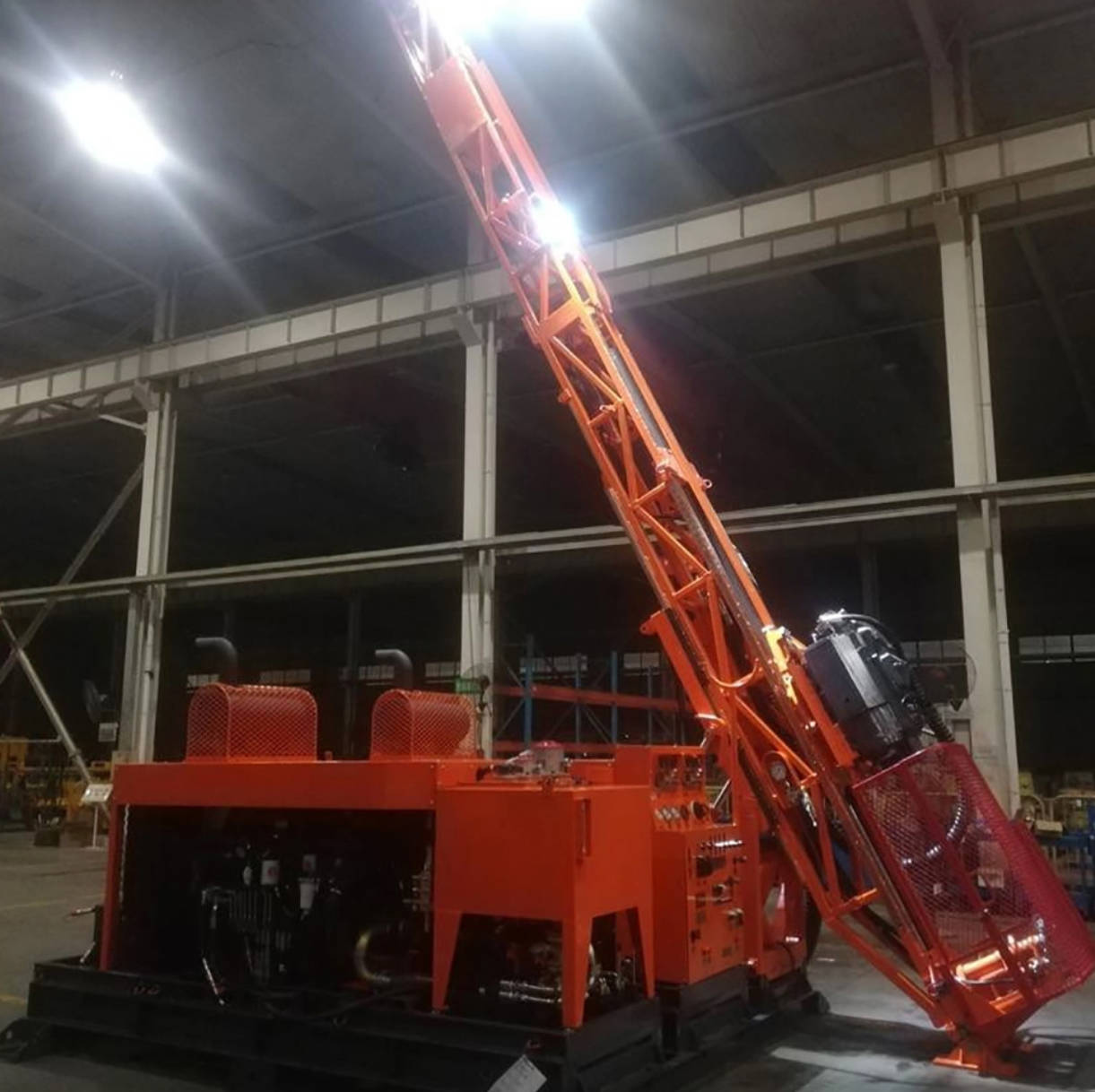
From a field engineering perspective, the most common mistake is assuming recovery rate alone equals data quality. It does not.
A sample can be recovered and still be compromised. The problem may not appear in the field, but it shows up later in the lab as poor reproducibility, unexpected chemistry, broken core geometry, or weak interpretability.
That is why modern full-hydraulic core surface drill rigs have become increasingly attractive for sensitive applications. Better control of torque, rotation speed, and feed force can reduce the hidden damage that older systems often create under changing ground conditions.
For CORTECH, this is not only a product advantage. It is a practical response to what field users actually need: more stable drilling, less disturbance, and more trustworthy samples.
Across modern drilling applications, performance discussions increasingly focus on sample fidelity, not just penetration speed. Industry field reports and technical documentation consistently show that sample recovery and sample integrity are strongly affected by formation type, drilling method, and how well the rig manages disturbance.
In practice, this means two rigs with similar power can produce very different results if one provides smoother control. For project teams, the takeaway is clear: precision often matters more than raw output.
To improve both environmental sampling and core recovery, field teams should apply a disciplined workflow.
1. Match the drilling method to the objective.
2. Calibrate feed and rotation before entering the target zone.
3. Reduce sudden load changes during advancement.
4. Use clean handling procedures at every stage.
5. Log sample depth, recovery, and visible disturbance immediately.
6. Review suspicious intervals for repeat sampling if needed.
- Keep the rig mechanically stable.
- Monitor vibration and torque response.
- Train operators to adjust gradually.
- Use the smallest effective disturbance.
- Document conditions that may influence sample quality.
These habits do more than improve efficiency. They improve the credibility of the final dataset.
As a manufacturer of fully hydraulic core surface drill rigs, CORTECH is positioned around a simple engineering principle: the rig must support the sample, not fight it.
For projects that involve environmental soil sampling, core recovery, or sensitive hard-rock drilling, a rig with precise control can make the difference between usable data and questionable data. In this sense, rig sensitivity is not a luxury feature. It is part of the sampling strategy itself.
Environmental soil sampling and traditional core recovery are not interchangeable. They answer different questions, require different levels of sample fidelity, and demand different rig behaviors.
If your project depends on contamination accuracy, undisturbed soil structure, or reliable core interpretation, rig sensitivity matters more than most teams realize. Choose equipment that gives operators precise control, stable response, and consistent performance across changing ground conditions.
If you are planning a project that demands higher sample integrity, consider a full-hydraulic core surface drill rig designed for precise feed control and low-disturbance recovery. The right rig will not just drill the hole better — it will protect the quality of the data your team depends on.
Environmental soil sampling focuses on preserving chemical conditions for lab analysis, while traditional core recovery focuses on retrieving intact geological or geotechnical core.
Because vibration, sudden torque changes, and unstable feed can damage sample integrity, mix layers, or break core before it is recovered.
Not always. A recovered sample can still be disturbed, smeared, or altered. Data quality depends on both recovery and fidelity.
Environmental soil sampling is usually better because it is designed to protect chemical accuracy and limit disturbance.
Traditional core recovery is usually better because it provides continuous material for logging, structural analysis, and mineral identification.
Yes, but only if it offers precise control over feed, rotation, and torque, with low vibration and stable performance across different formations.
1. IAEA, Soil sampling for environmental contaminants — [Link]
2. ScienceDirect, A comparison of sampling techniques for VOCs in soil — [Link]
3. U.S. EPA Archives, Soil Sampling Technology Geoprobe Systems, Inc. — [Link]
4. U.S. DoD, Environmental Field Sampling Handbook — [Link]
5. CORTECH Drilling, Core Surface Drill Rigs for High Precision Diamond Core Drilling Projects — [Link]
6. CORTECH Drilling, A Field Engineer's Perspective on Hydraulic Core Rigs — [Link]
7. CORTECH Drilling, Full Hydraulic vs Semi-Hydraulic Core Drilling Rigs — [Link]


