
Views: 226 Author: CORTECH Publish Time: 2026-10-11 Origin: Site


Content Menu
● Understanding Drill Rig Types: Method Versus Configuration
● The Four Main Types of Drill Rigs at a Glance
● 1. Rotary Drill Rigs: Versatile Equipment for Borehole Construction
>> Where Rotary Drill Rigs Are Useful
>> What Rotary Cuttings Cannot Show
● 2. Percussion Drill Rigs: Impact-Based Drilling for Hard Rock
>> How Percussion Drilling Works
>> Where Reverse Circulation Fits
>> When Percussion Drilling Is the Better Fit
● 3. Auger Drill Rigs: Practical Solutions for Shallow Soil Investigation
>> Advantages and Sampling Limitations
>> Where Augers Encounter Problems
● 4. Core Drill Rigs: Recovering Rock for Geological Decisions
>> How Diamond Core Drilling Works
>> Why Wireline Core Retrieval Matters
>> Matching CORTECH Core Rigs to the Working Environment
● A Better Selection Process: Start With the Required Evidence
>> Step 1: Define the Final Deliverable
>> Step 2: Describe the Ground Conditions
>> Step 3: Specify the Hole and Tooling
>> Step 4: Check Site Logistics
>> Step 5: Compare the Complete Operating Package
● Three Practical Insights That Improve Rig Comparisons
>> Compare Cost per Useful Result, Not Only Cost per Meter
>> Separate Core Recovery From Geological Quality
>> Turn Customer Feedback Into Verifiable Questions
● Choose the Drilling System Around Your Project
● Frequently Asked Questions About Drill Rig Types
>> 1. What Are the Four Main Types of Drill Rigs?
>> 2. Is a Diamond Core Drill a Rotary Drill?
>> 3. What Is the Difference Between RC Drilling and Core Drilling?
>> 4. Are Surface, Heli-Portable, and Underground Rigs Different Drilling Methods?
>> 5. Which Drill Rig Is Best for Hard Rock?
>> 6. What Information Should Buyers Send CORTECH?
The four main types of drill rigs commonly compared by drilling method are rotary drill rigs, percussion drill rigs, auger drill rigs, and core drill rigs. Each serves a different purpose: creating production holes, breaking hard rock, investigating shallow soils, or recovering geological samples.
However, classification matters. These four categories provide a practical comparison, not a universal industry standard. Core drilling also uses rotation, while many percussion systems combine hammering with rotation. Other classifications describe where equipment operates, how it moves, or what industry it serves.
For buyers, the useful question is therefore not simply "Which drill rig is strongest?" It is "Which drilling system delivers the hole, sample, and geological information my project requires?"
This guide explains the four drilling rig types, their limitations, and how to select equipment for mineral exploration and ground investigation.

Before comparing equipment, separate the drilling method from the rig configuration.
The drilling method describes how the tool penetrates the ground and what material it recovers. Rotary systems generally produce cuttings. Percussion systems fracture material through repeated impacts. Augers mechanically lift excavated soil. Core drilling preserves a cylindrical sample.
Rig configuration describes the equipment's working environment and transport arrangement.
For example, a wireline diamond core drilling system may operate on:
- A surface rig positioned on an exploration pad.
- A modular, heli-portable rig transported to remote terrain.
- An underground rig installed inside a mine.
These are different configurations of core drilling equipment—not three additional drilling methods.
This distinction explains CORTECH's product structure. CORE SURFACE DRILL, CORE HELI DRILL, and CORE U/G DRILL address different operating environments, while CORE DRILLING TOOL covers associated tooling, including drill bits and drill rods.
| Drill rig type | Main drilling action | Typical recovered material | Common applications | Main limitation |
|---|---|---|---|---|
| Rotary drill rig | Rotating bit cuts or crushes the formation | Cuttings carried by circulating fluid or air | Water wells, production holes, ground investigation | Cuttings do not preserve continuous rock structure |
| Percussion drill rig | Repeated impacts break material, often with rotation | Fragmented rock or chips | Hard-rock holes, quarrying, selected exploration programs | Conventional hammer drilling does not recover intact core |
| Auger drill rig | Helical flights excavate and lift material | Disturbed soil; separate samplers may collect specimens | Shallow soil investigation and monitoring-well work | Restricted by hard rock, boulders, and difficult ground |
| Core drill rig | Annular bit cuts around a cylindrical sample | Rock core | Mineral exploration and rock-mass investigation | Requires careful tooling, fluid, and sample-recovery management |
Actual suitability depends on geology, borehole diameter, depth, sampling requirements, and site conditions. No single row guarantees performance on every project.
A rotary drill rig applies rotation and downward force to a drill bit. The bit cuts, shears, or crushes the formation.
A circulation system removes cuttings from the borehole. Depending on the application, the circulating medium may be drilling mud, water, air, or a suitable combination.
In conventional direct circulation, the medium travels down the drill string and returns through the space between the rods and borehole wall.
Cuttings removal is essential. Poor circulation can allow material to accumulate around the bit, increase resistance, and undermine drilling progress.
Rotary drilling supports a broad range of borehole-construction applications, including water wells and subsurface investigation.
For buyers, its versatility is attractive. However, "rotary" alone says little about a machine's actual capabilities.
Evaluate:
- Available torque across the operating speed range.
- Feed and pullback capacity.
- Compatibility with the required bit and hole diameter.
- Circulation equipment.
- Casing and borehole-support requirements.
A rig's advertised depth should always be considered alongside these conditions.
Cuttings can indicate rock composition, but they do not preserve a continuous cylinder of rock.
They may provide less direct information about fracture relationships, bedding contacts, or structural orientation than recovered core.
When a project needs detailed rock-mass interpretation, the sampling objective may justify core drilling even if another method advances holes faster.
Percussion drilling uses repeated impacts to fracture the formation.
Modern rotary-percussion systems combine hammering with rotation. In down-the-hole drilling, the hammer operates near the bit at the bottom of the drill string.
Compressed air commonly supplies hammer energy and helps carry cuttings out of the hole.
This combination makes percussion systems useful for many hard-rock applications. Performance still depends on rock properties, air supply, water conditions, and equipment selection.
Reverse circulation, or RC, is not simply another name for percussion drilling.
The term describes a circulation arrangement. In mineral exploration, RC commonly combines a percussion hammer with dual-wall drill rods. Samples return through the inner passage of the drill string.
This helps distinguish the sample-return path from conventional open-hole cuttings transport.
RC can support mineral exploration programs that need chip samples for geological assessment and laboratory analysis. However, chips are not equivalent to intact diamond drill core.
Percussion systems suit projects where breaking hard rock and producing an appropriate borehole are the main objectives.
Before selection, clarify:
- Whether chip samples satisfy the investigation.
- The compressor requirements.
- Expected groundwater conditions.
- Dust-control arrangements.
- Noise restrictions and site access.
Do not choose a hammer-based system solely because the formation is hard. Hard rock can also require diamond coring when geological structure is the priority.
An auger uses rotating helical flights to excavate soil and move material toward the surface.
Solid-stem and hollow-stem augers serve different purposes.
A hollow-stem auger provides an internal passage through which suitable sampling equipment or well components can be introduced. The auger assembly can also provide temporary support to the borehole.
This makes hollow-stem augering useful in selected soil-investigation and monitoring-well applications.
Auger drilling can reduce reliance on circulating drilling fluids in suitable ground. That can be valuable when fluid introduction would complicate an investigation.
However, material carried up the flights is disturbed. Its exact original depth may be difficult to establish.
For investigations requiring controlled-depth samples, specify a separate sampling procedure rather than treating auger cuttings as equivalent to an undisturbed specimen.
Augers generally suit unconsolidated materials and selected softer formations.
Common difficulties include:
- Cobbles and boulders.
- Competent rock.
- Saturated or flowing sands.
- Sticky materials that increase binding.
- Depth-related torque and extraction demands.
There is no universal maximum auger depth. Ground conditions, auger diameter, and equipment capacity determine practical limits.
A diamond core drill uses an annular bit to cut around the outside of a cylindrical rock sample.
The core enters a core barrel while drilling fluid supports cooling and cuttings removal.
Unlike full-face drilling, the objective is not merely to excavate a hole. It is to recover material that preserves useful geological relationships.
Recovered core can support examination of:
- Lithology and mineralization.
- Alteration and geological contacts.
- Fractures and discontinuities.
- Rock-mass characteristics.
- Structures relevant to further investigation.
Where orientation is required, an appropriate core-orientation system and handling procedure must also be specified.
In a wireline system, the sample-receiving inner tube is retrieved through the drill string using a wireline and overshot.
The outer rods normally remain in the borehole during sample retrieval.
This avoids pulling the entire drill string for every core run and can reduce retrieval-related downtime, particularly as holes become deeper.
Nevertheless, wireline equipment does not automatically guarantee excellent recovery. Bit selection, drilling parameters, barrel configuration, fluid management, and operator decisions remain important.
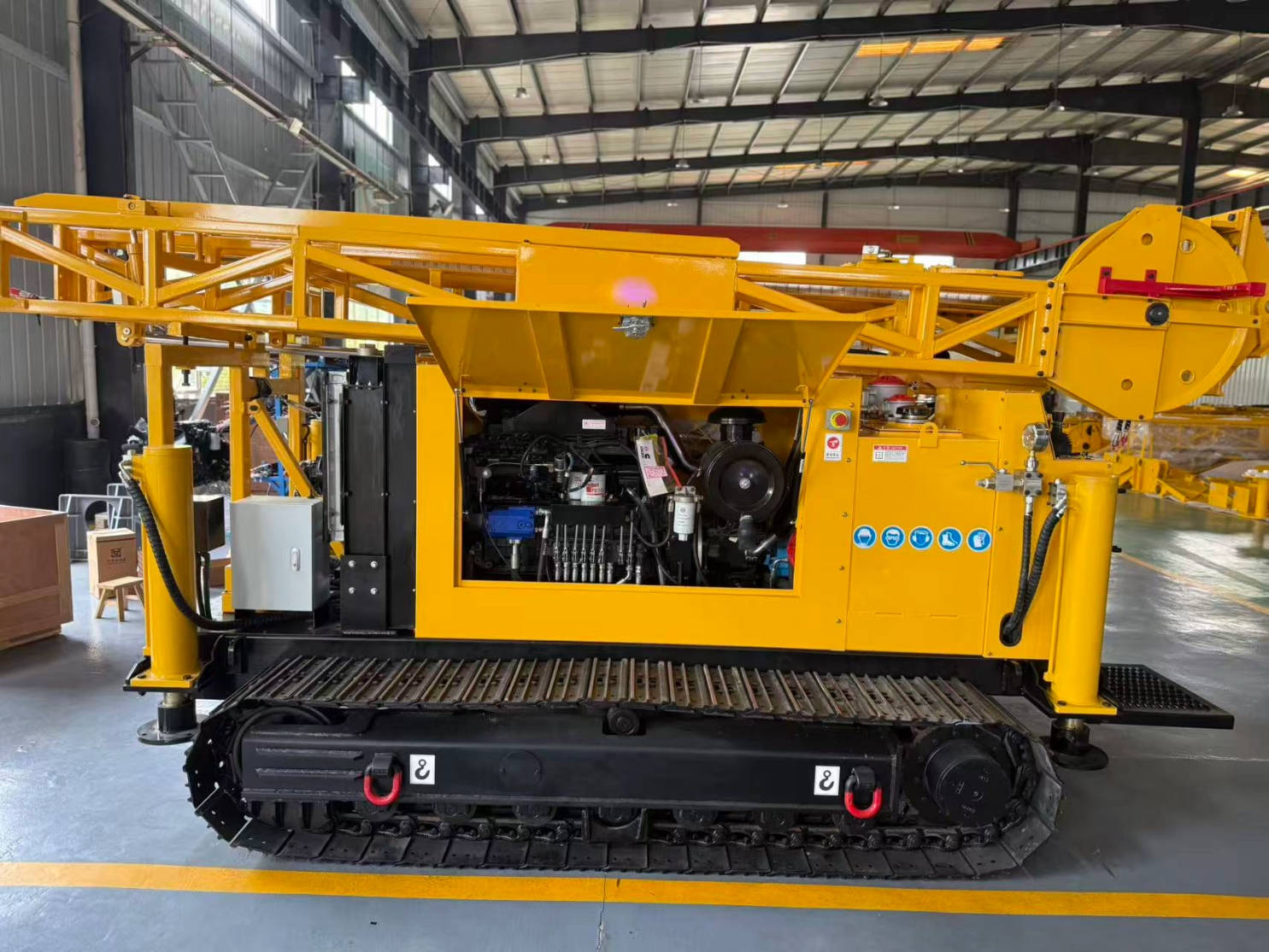
CORTECH focuses on fully hydraulic wireline diamond core drilling equipment and associated core drilling tools.
Its principal configurations address three distinct needs:
| CORTECH product category | Working environment | Questions buyers should resolve |
|---|---|---|
| CORE SURFACE DRILL | Surface exploration pads | Access, operating depth, rod size, platform stability, and support services |
| CORE HELI DRILL | Remote, helicopter-supported sites | Module weights, lifting arrangements, assembly requirements, and aircraft compatibility |
| CORE U/G DRILL | Underground workings | Available space, drilling angles, anchoring, power, ventilation, and access |
| CORE DRILLING TOOL | Compatible coring operations | Bit, rod, barrel, thread, and dimensional compatibility |
A modular rig's transport suitability must be verified against actual component weights and helicopter lifting capability under site conditions.
For underground equipment, confirm the complete operating envelope—not just the machine's parked dimensions.
Decide whether the project needs a completed borehole, soil specimens, rock chips, or intact core.
This decision narrows the equipment options more effectively than comparing engine power first.
Provide the manufacturer with expected formations, weathered intervals, fractured zones, groundwater conditions, and known instability.
Where information is uncertain, identify the uncertainty rather than presenting assumptions as confirmed geology.
State target depth, drilling angle, hole diameter, core size, and proposed rod system.
Ask which assumptions support the quoted drilling capacity. Changing rod size or hole inclination can change the operating demands.
Review transport access, pad dimensions, water supply, power availability, lifting equipment, and maintenance access.
A technically capable machine may still be unsuitable if its support requirements exceed what the site can provide.
Evaluate tooling, consumables, training, spare parts, and service arrangements alongside the rig.
The purchasing decision should cover a functioning drilling system, not an isolated machine.
Fast drilling is valuable only when it produces the required result.
For exploration, compare the cost of obtaining usable samples and reliable geological information. Include mobilization, casing, downtime, consumables, sample handling, and possible redrilling.
A lower drilling rate can be commercially acceptable when it delivers evidence another method cannot provide.
Core recovery measures recovered core length relative to the drilled interval.
For example, recovering 2.7 meters from a 3.0-meter run gives 90% recovery.
That figure does not establish that every recovered piece is undamaged, correctly oriented, or equally informative.
Track recovery alongside sample condition, depth records, and the specific observations the investigation requires.
Customer comments become useful when they identify comparable operating conditions.
"Easy to move" means little without module weights, transport distances, and assembly requirements.
"Good productivity" needs context about geology, hole depth, core size, and downtime.
Request documented examples where available. Avoid treating testimonials as substitutes for specifications or evidence of guaranteed performance.

The right rig connects the drilling method, sample objective, and site configuration.
Send CORTECH your project specifications and request a matched recommendation for the rig, core barrel, drill rods, bits, and supporting equipment. Ask for the assumptions behind the proposed capacity and a clear description of transport, installation, and service requirements before purchasing.
A practical method-based comparison includes rotary, percussion, auger, and core drill rigs. These categories overlap technically and do not represent a universal classification covering every industry.
Yes. Diamond core drilling uses rotation. It is discussed separately here because its annular cutting method and intact-sample objective differ from conventional full-face rotary drilling.
Exploration RC drilling generally recovers rock chips through an internal return path. Diamond core drilling recovers cylindrical rock samples. The appropriate choice depends on the geological evidence required.
No. These terms describe working environments and equipment configurations. All three can use wireline diamond core drilling, provided the selected machine and tooling suit the application.
Both percussion and diamond core systems can suit hard rock. Choose percussion when an appropriate hole or chip sample is sufficient. Choose core drilling when intact geological samples are necessary.
Provide target depth, core and rod sizes, drilling angles, expected geology, access restrictions, power and water availability, and transport requirements. Underground projects also need working-space details.
1. U.S. Geological Survey — Application of Drilling, Coring, and Sampling Techniques to Test Holes and Wells. Technical reference for drilling methods, sampling equipment, augering, and hydraulic-rotary operations. [pubs.usgs]
2. U.S. Geological Survey — Research Drilling Program Equipment. Documents equipment configured for air and mud rotary drilling, wireline coring, and air-percussion applications. [usgs]
3. Federal Remediation Technologies Roundtable — Field Sampling and Analysis Technologies Reference Guide: Hollow-Stem Auger. Supports the discussion of disturbed cuttings, flowing sands, and ground-condition limitations. [frtr]
4. California Department of Toxic Substances Control — Drilling, Logging & Sampling at Contaminated Sites. Supports auger sampling limitations, material mixing, and difficulties in saturated or coarse ground. [dtsc.ca]
5. Boart Longyear — The Ins and Outs of Wireline Core Retrieval Systems. Explains the independent inner tube, latch mechanism, overshot, and wireline retrieval process. [boartlongyear]
6. Boart Longyear — Reverse Circulation Drilling. Provides the industry-service context for chip sampling and preliminary geological information. [boartlongyear]
7. CORTECH — Top Core Drill Rig Manufacturers: How to Compare Surface, Heli-Portable, and Underground Diamond Drilling Solutions. Manufacturer source for product categories and configuration-specific purchasing considerations. [cortechdrilling]
8. CORTECH — Corporate Website. Manufacturer source for the company's fully hydraulic diamond core drilling equipment focus. Company descriptions are manufacturer-provided rather than independent performance verification. [cortechdrilling]


